

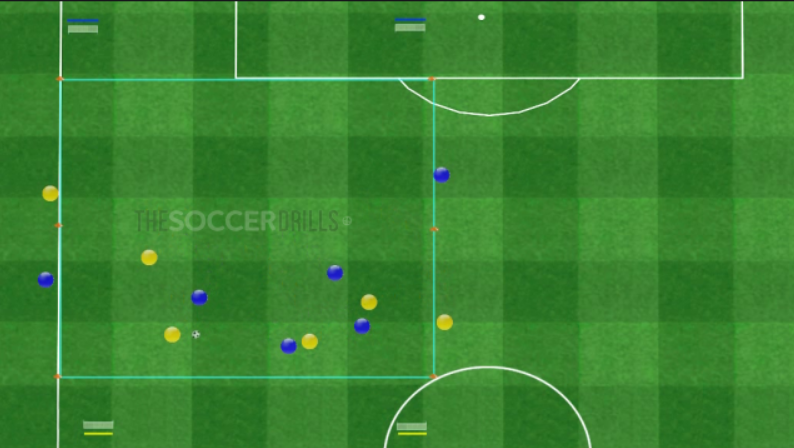
4 Goals: Engage rivals + Pressure after losing possession
It is really difficult to achieve an advantage when finishing a play. We will increase a little bit the difficulty in this game so your players, when competing, are able to find the advantage to finish the play easily.
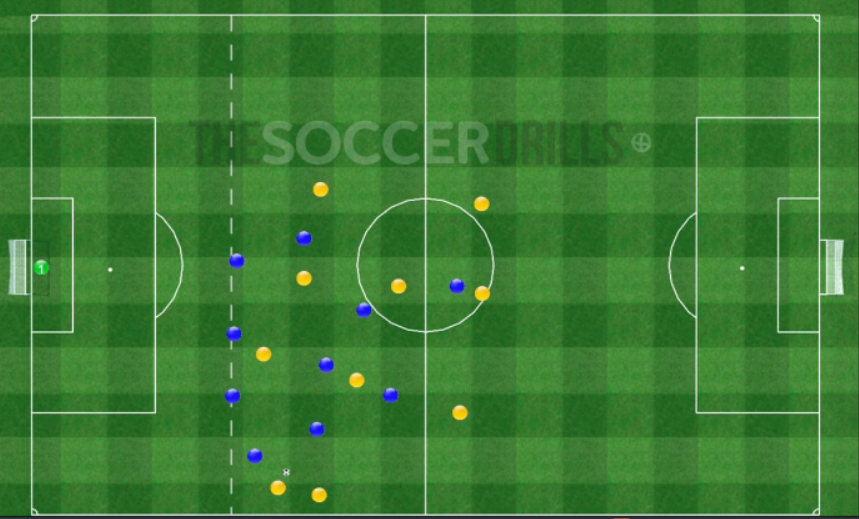
Conditioned Game: Pressure in middle block
We will use an easy condition that will make our players close the interior spaces in a better way, to not allow the passing lines and to do not let the defenders get right in shape to defend deep balls.
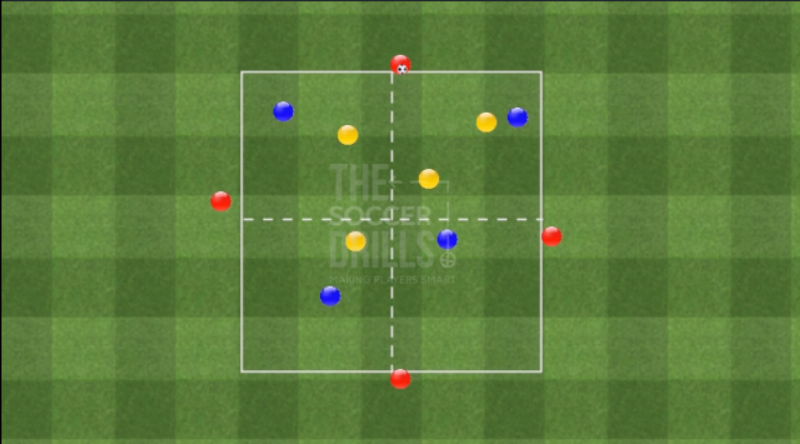
4 Squares – Positional Game
To occupy the field rationally is one of the main objectives of the coaches at early ages. This is a good introduction to the position game for different playing systems.
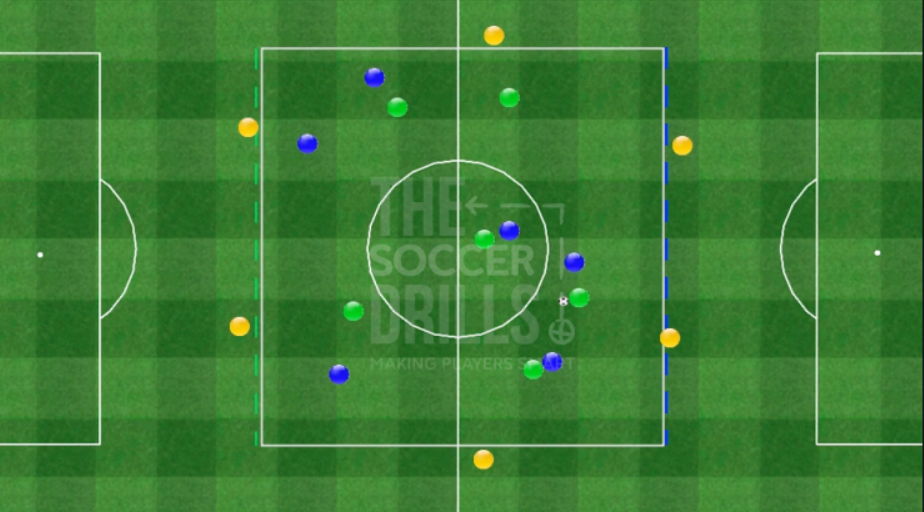
Offensive and Defensive Transition 3 Teams with orientation
A tactical drill of polarized transitions in order to make your players identify the risks depending on the zone they are playing. At the same time, we will train the ball retention trying to do it in the most high part of the field possible.
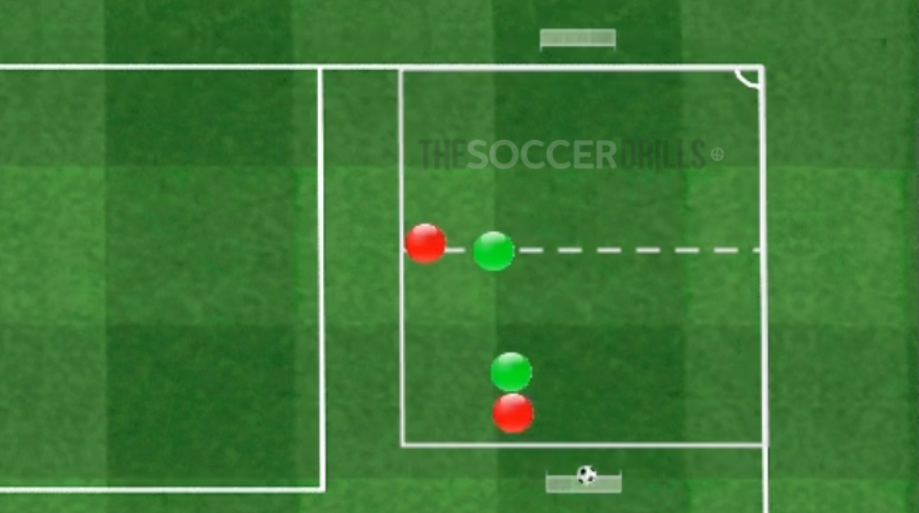
Small Sided Game 2v2 high pressure
Small sided tactical game in which we will reward the correct high press. The player will learn how to fix the distances in front of the player with the ball, will learn how to delay the game defensively, coverages, defensive exchanges and when the right moment to do a tackle is or to make the team in possession lose the ball.
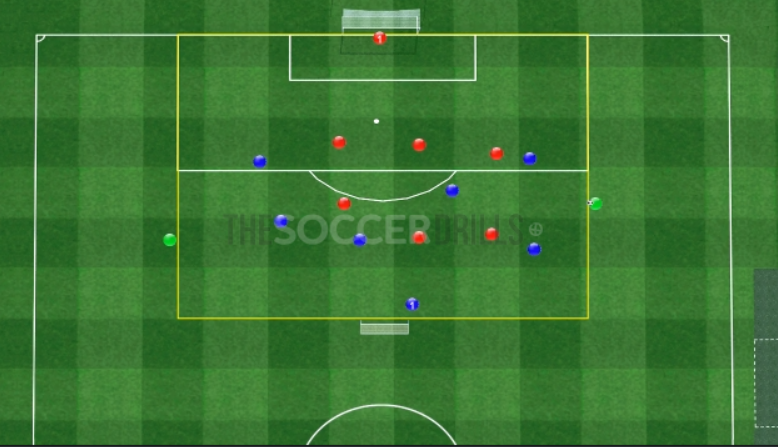
Double Box: Counterattack and pressure after losing possession
Either to advance in the game after winning the ball back or to avoid it are the objectives of a lot of styles of play. We will practice it in this intense drill in which we will make our players improve the transitions. The dimensions will be the double of the box.
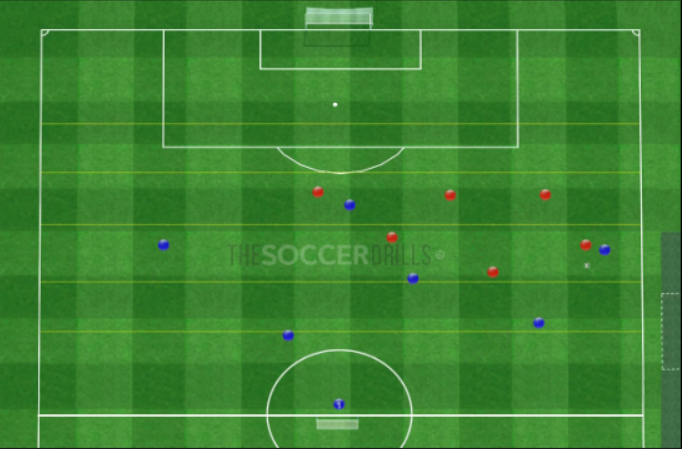
Zonal Defense: Move forward or backwards
In every movement of the ball we do, the defensive situation changes. Did the ball go forward or backwards? Is the player on the ball pressed? Does he have options to pass the ball to a free player? These are some of the several decisions that we have to practice.
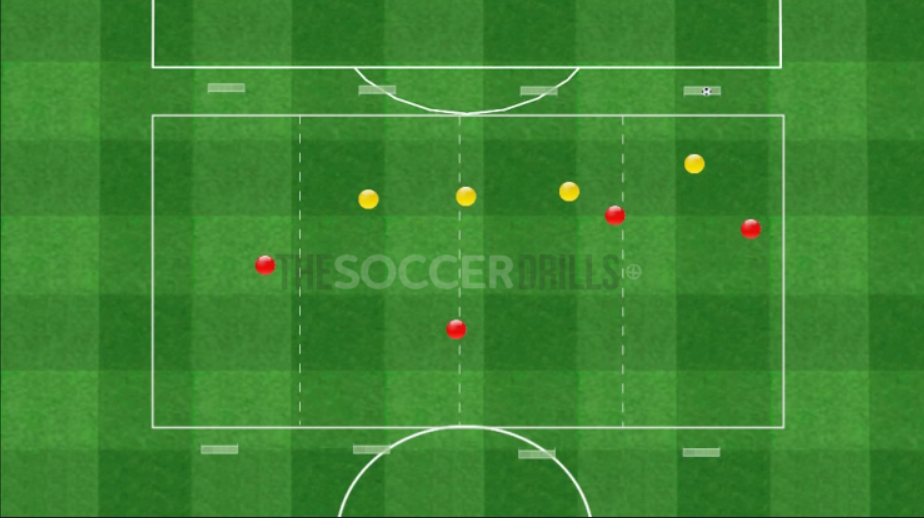
4 Lanes: Ball Circulation Vs Shifting
To be good at shifting, coverages and closing spaces are the basics for a good defensive tactic. For being successful when attacking we will need to be good at a different variety of offensive tactic concepts.
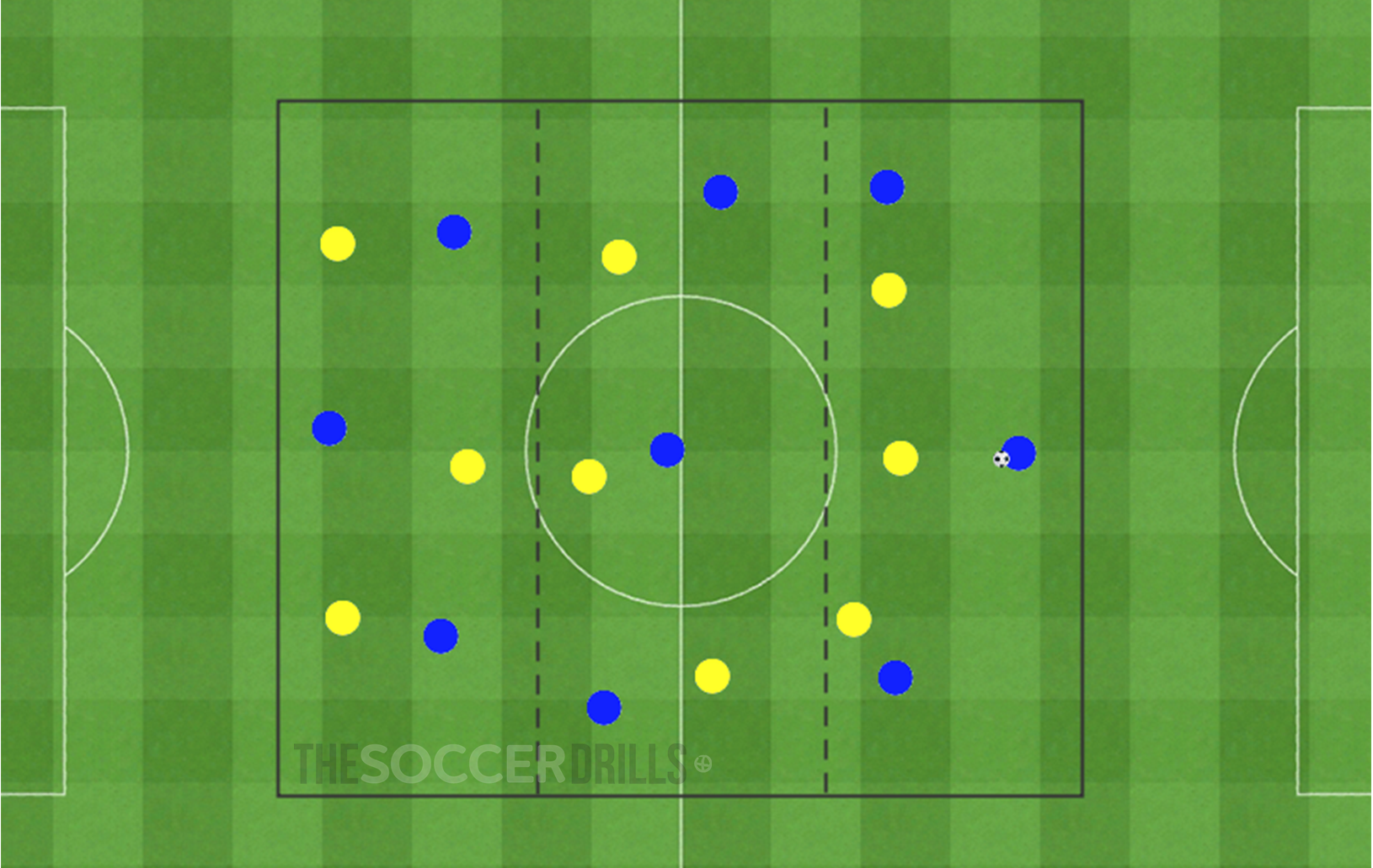
Understanding of the game
Tactical situation to improve the decision making about when to create a numeric superiority or when to keep being a support in an intermediate distance.
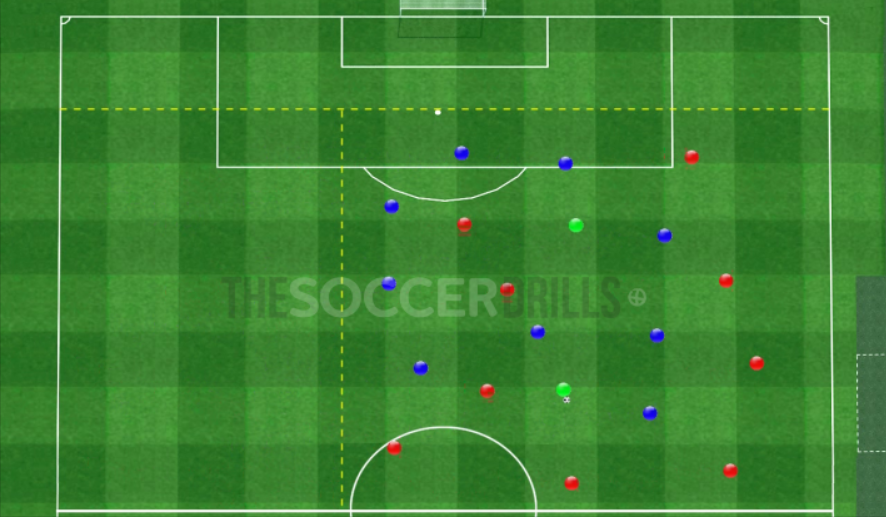
Different Spaces
We will use this tactical drill in order to identify empty spaces and to play not only with the closest players but also with the intermediate and the players farther away. This drill will make your player give the right importance to play easy passes in reduced spaces. In the drill you will practice the decision making when it comes to play quick, to move, to stay and to delay the game.