

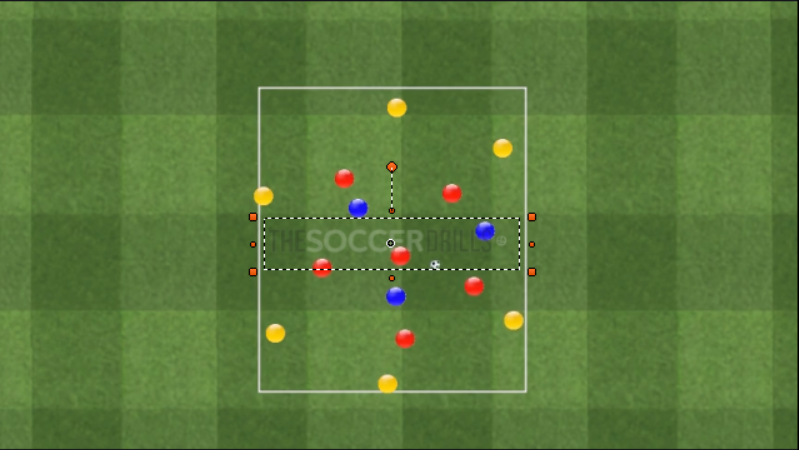
6v6+ 3 neutrals – Positional Game – Specific for MCs
Decision making mental speed. Sometimes, the only thing we need to create a good offensive play is to move one meter or to turn 45 degrees. This is a drill in small spaces with a high tactical demand and a lot of decisions to make.
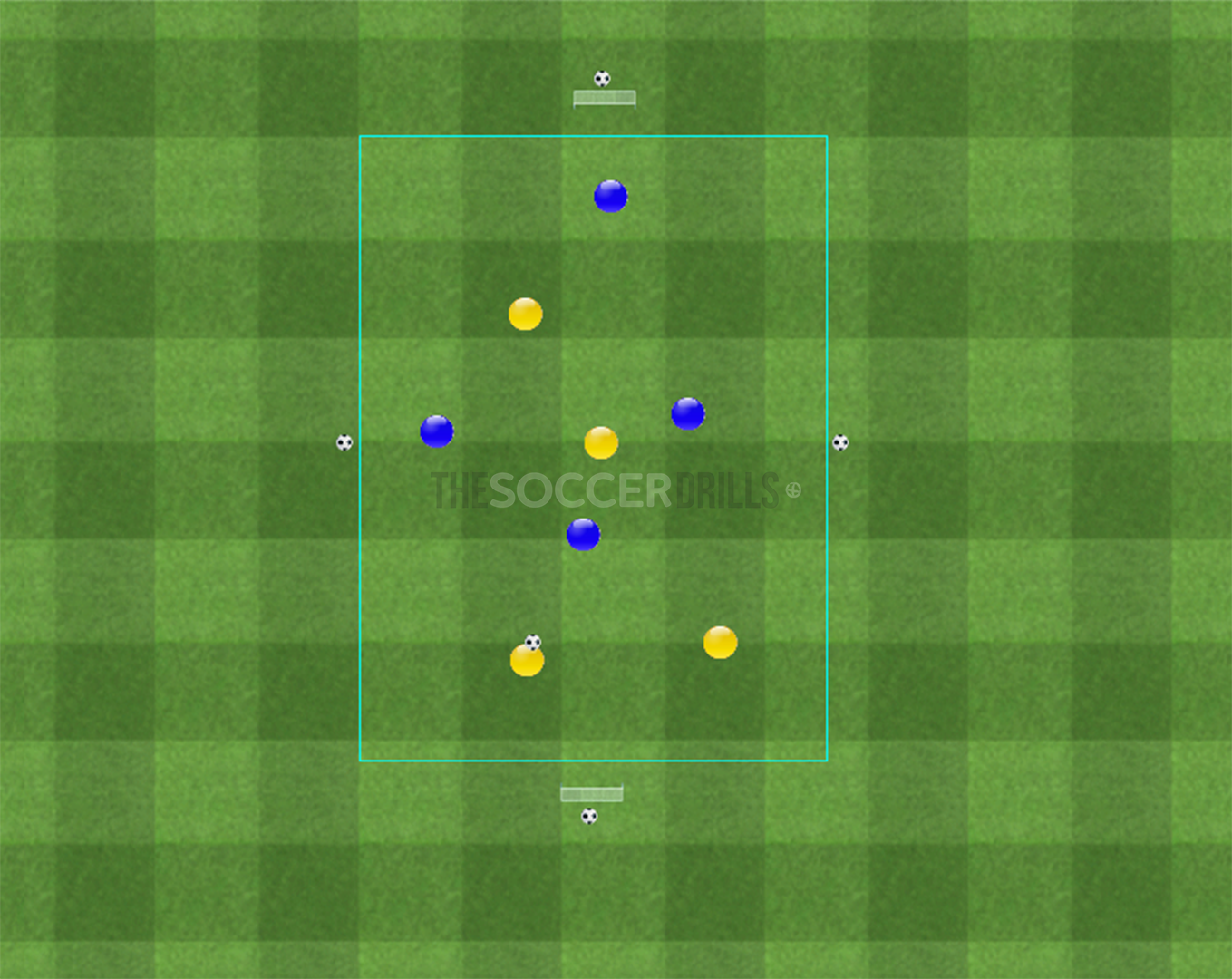
Numerical Superiority/Inferiority (4vs3, 3vs2, 2vs1,…)
To identify superiority and inferiority for a right and quick decision making both offensively and defensively is a really fun drill for all ages.
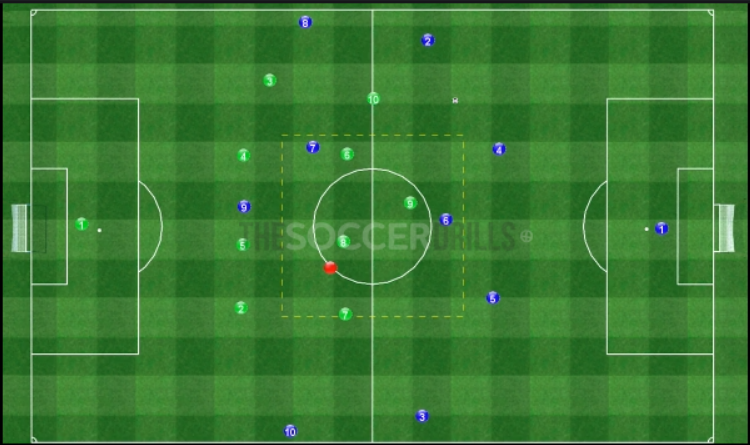
Conditioned Game: Switching and Stretching
If a team, while progressing on the field, opts for switching the play, for playing wide, for alternating passes to the interior and the exterior and it is positionally balanced, will be successful when attacking. This drill is a conditioned game that will orientate your players.
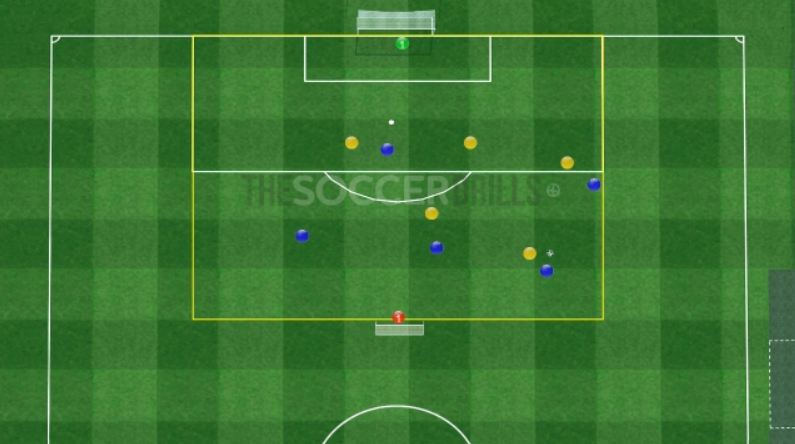
Finishing and Pressure after losing possession
A drill with the double of the box as the dimensions. We will put rules to reward the high press and the press after losing possession. At the same time we will work on how we would be able to overcome these two situations to achieve a good position for finishing.
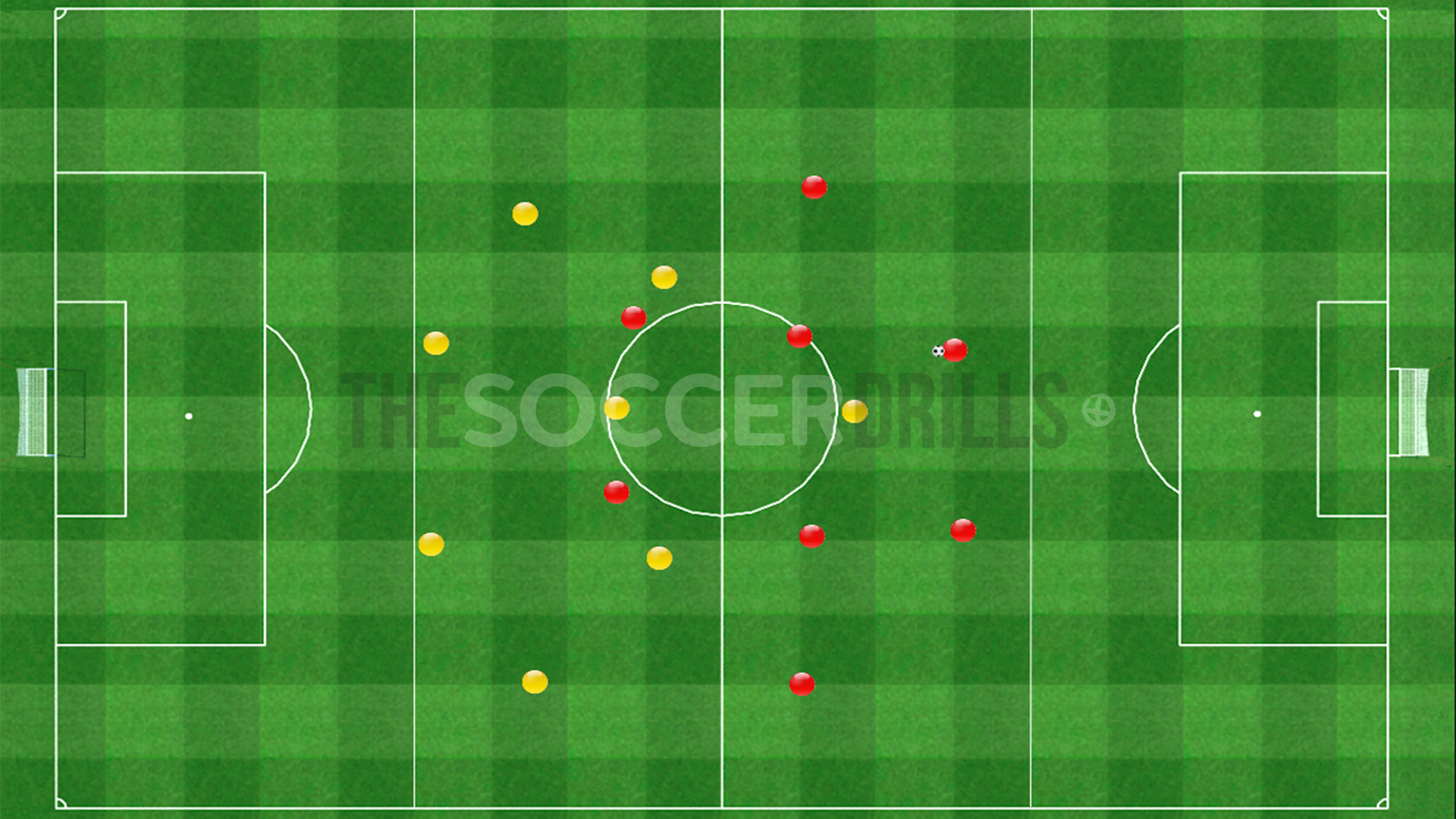
Zonal Defense Vs Overcoming Lines
The objective is to move from the creation zone to the finishing zone. To avoid that the rivals could send the ball to your defenders back.
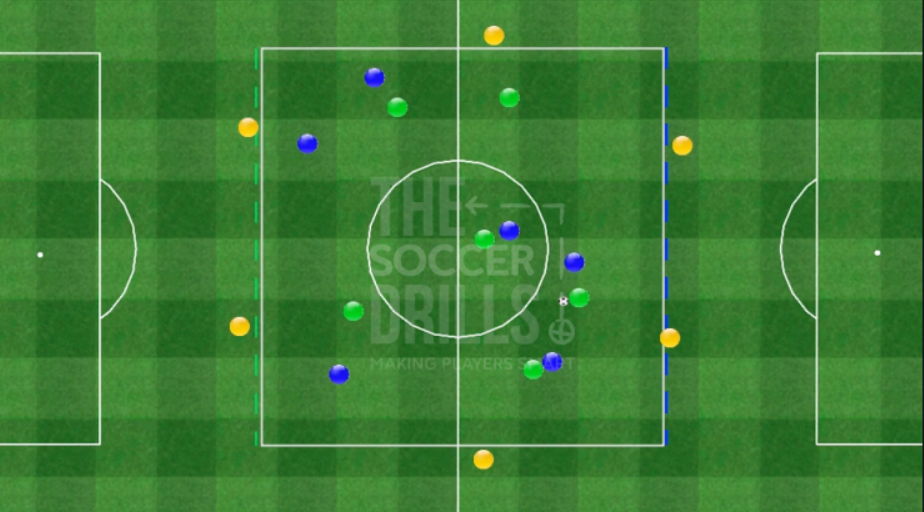
Offensive and Defensive Transition 3 Teams with orientation
A tactical drill of polarized transitions in order to make your players identify the risks depending on the zone they are playing. At the same time, we will train the ball retention trying to do it in the most high part of the field possible.
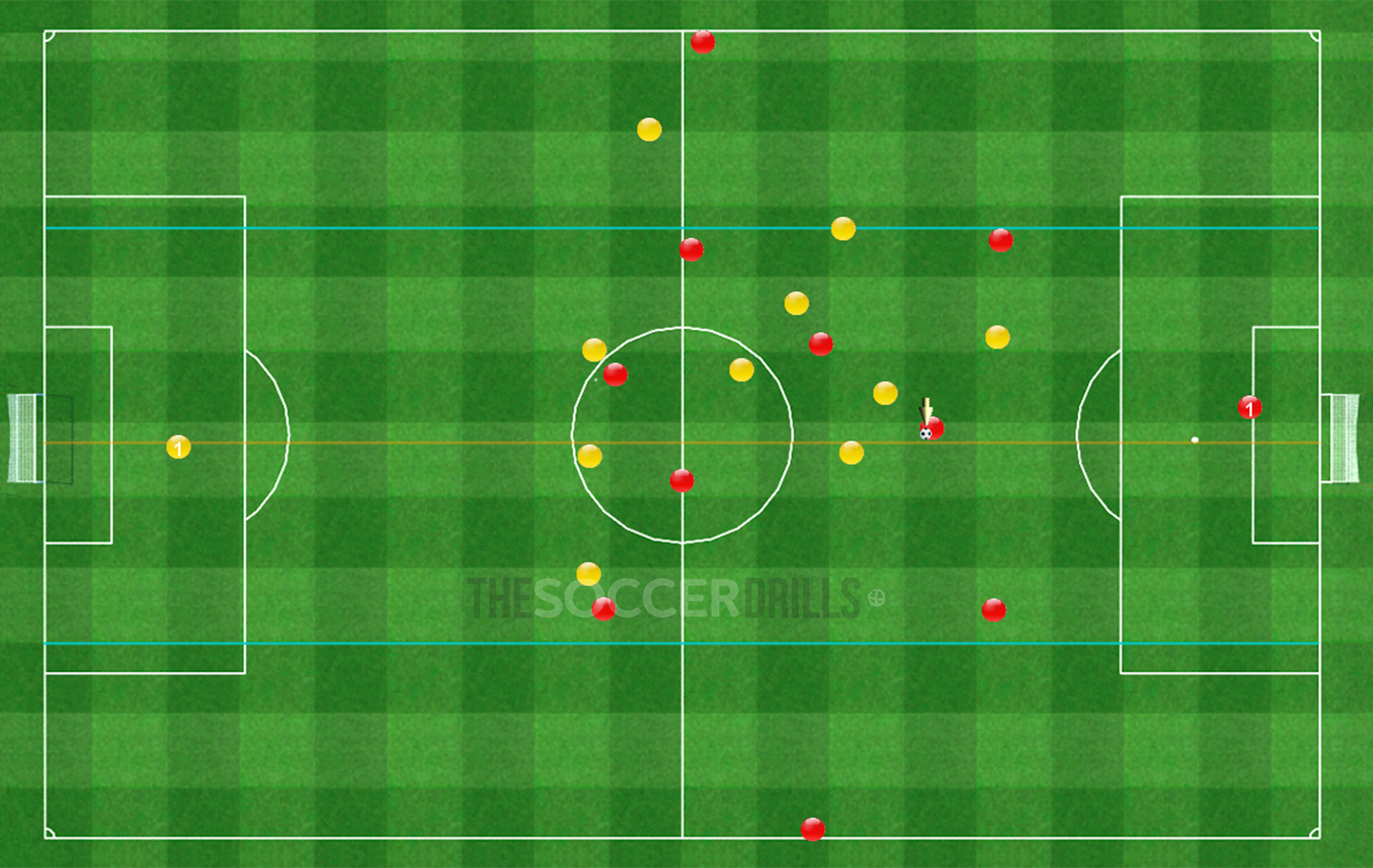
Conditioned Game: Shifting and Intensive Pressing
A good pressing and a defensive balance against the position game (Sarri, Guardiola, Nagelsman), with a rule which will make the offensive players to choose the right position in order to fix the defenders.
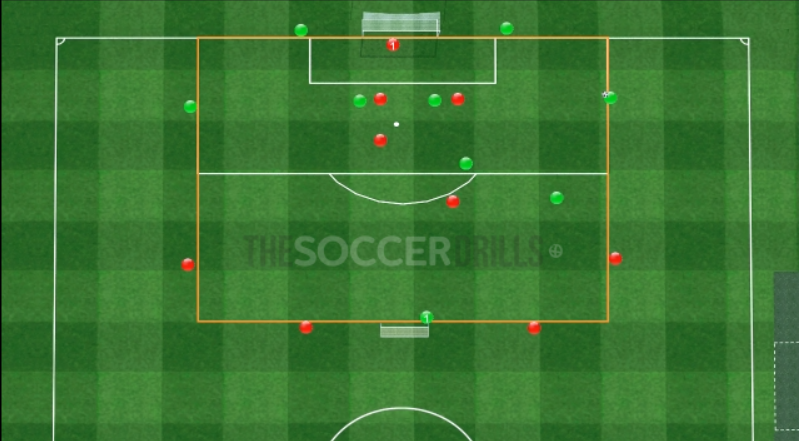
Double Box: Counterattack with players outside the active zone
To connect with players which are the farthest away possible from the ball is a synonymous of a good counter attack. To prevent your rivals of doing it is a synonymous of a good press after losing the ball and an accurate drop back. In this drill your players will improve both the defensive and the offensive transitions. The dimensions will be the double of the box.
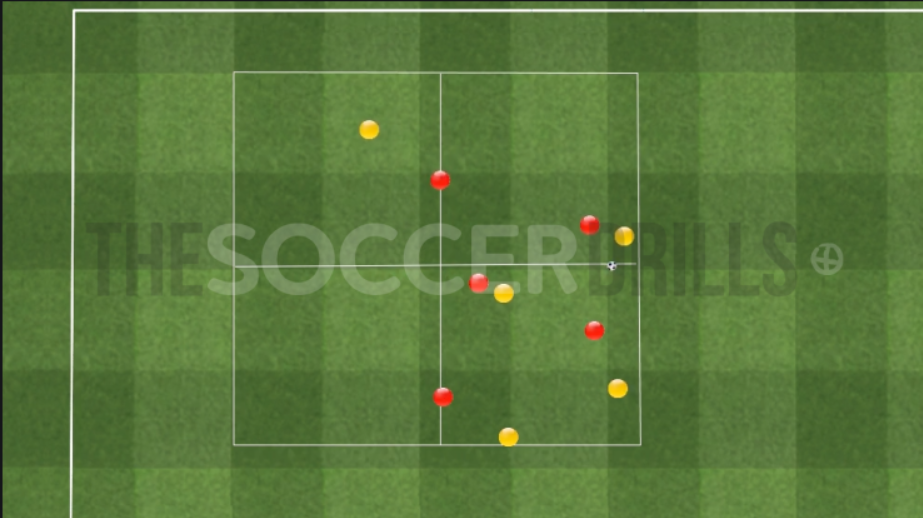
Four squares possession
To achieve an appropriate players’ distribution in the free spaces, to switch the game successfully, to choose either checking to the ball or checking away… this drill will make you players think and take decisions.
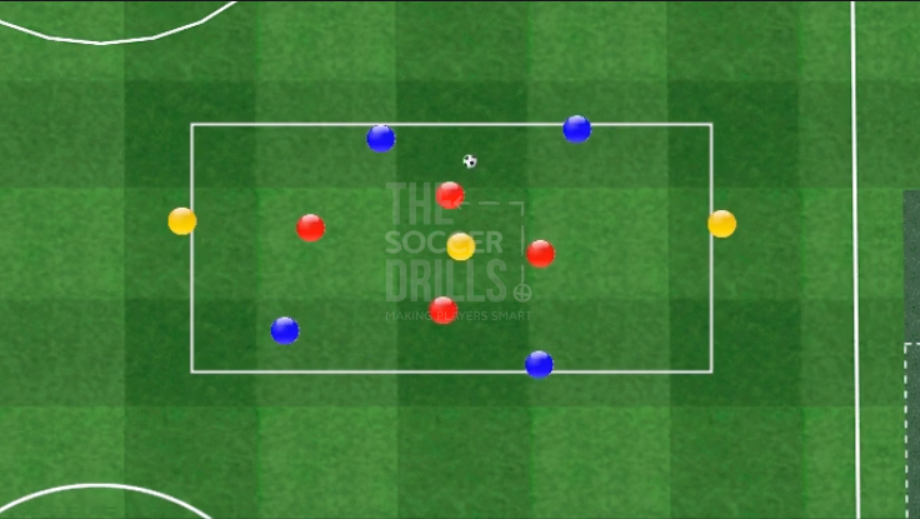
Positional Play – Third Man
It is a classical position drill which is used by different elite coaches like Klopp, Guardiola or Sarri. Quick decision making and little movements to create free passing lines at a higher speed than the real game. This will help your players to make the right decisions during the game.