

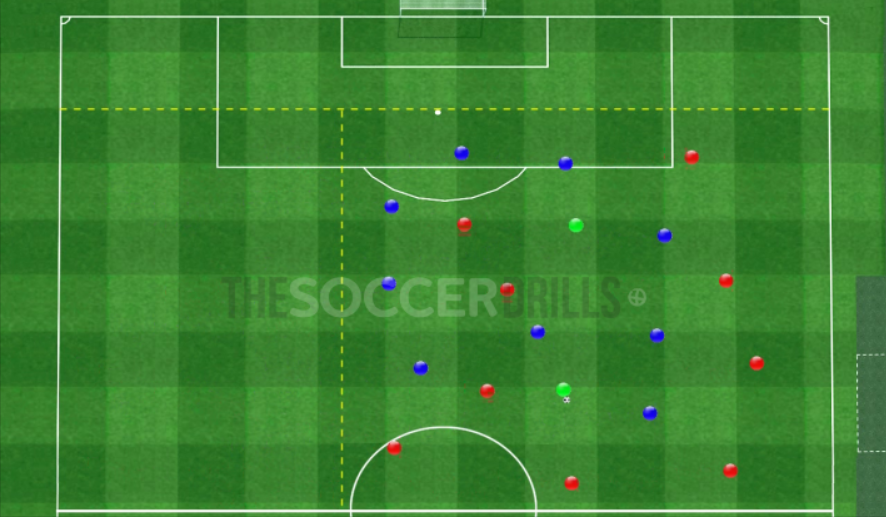
Different Spaces
We will use this tactical drill in order to identify empty spaces and to play not only with the closest players but also with the intermediate and the players farther away. This drill will make your player give the right importance to play easy passes in reduced spaces. In the drill you will practice the decision making when it comes to play quick, to move, to stay and to delay the game.
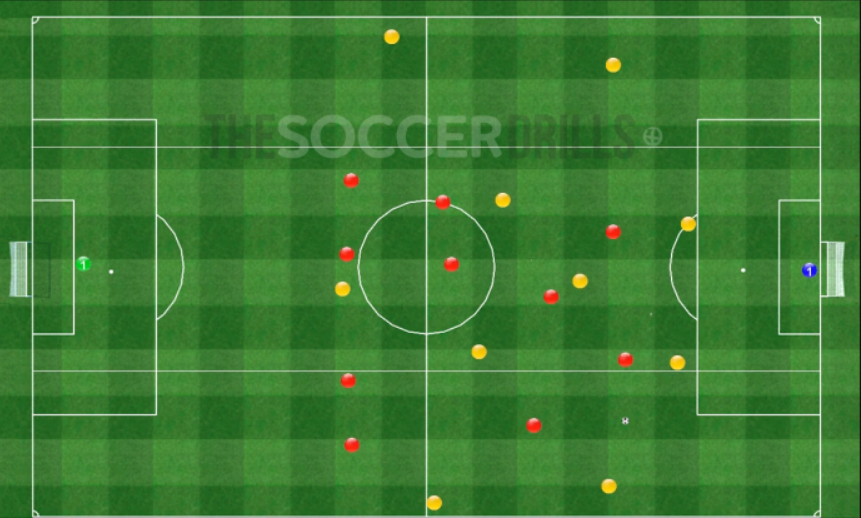
Change to a high pace of game with CM
To associate the beginning of the change of pace with the reception of the ball by one of your midfielders in an advantageous situation, will make you achieve a higher tactical finishing level. You will also generate situations in which you will be able to get the ball to a free man and a third man.
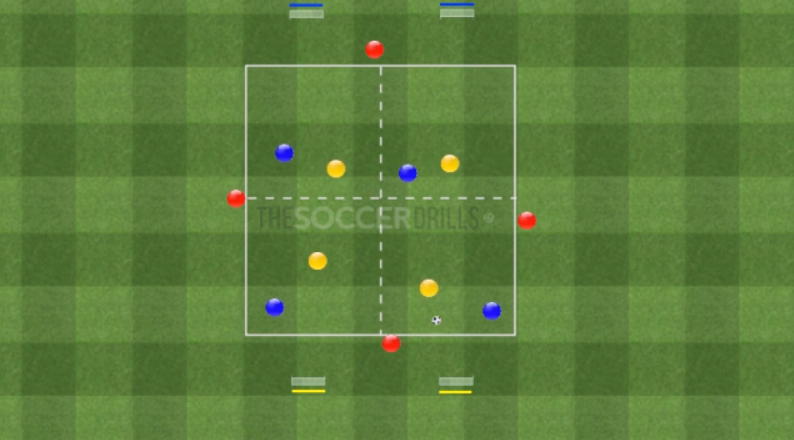
4 Squares – Positional Game – Small Sided Game
To practice the ball retention, the switch of the play, the speed of the game and the supports while we introduce different position game concepts will derive in a tactical learning for every player.
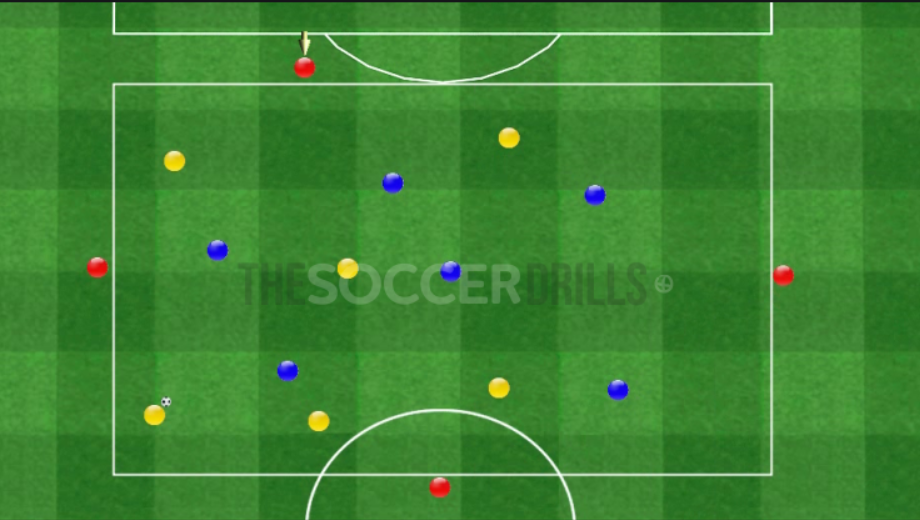
Supports: Superiority/inferiority
Ball retention, body orientation (One of Guardiola’s biggest obsession) to receive the ball from the exterior neutral player who has advantage through the guided discovery learning method. The defensive anticipations will make the attackers be on the right body shape to retain the ball and switch the play.
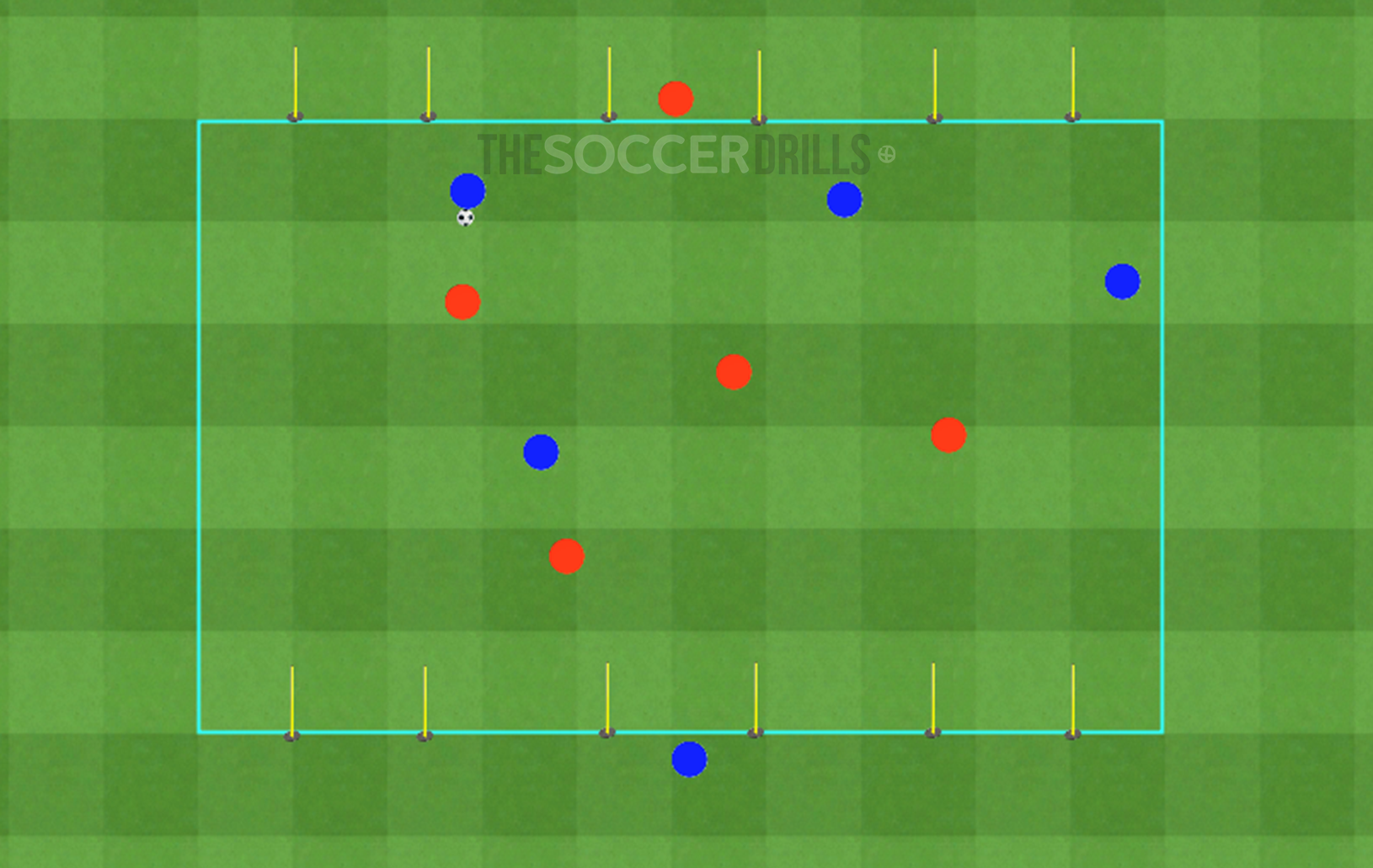
Small sided game – Free man
Tactical drill oriented to use, when attacking, the third man and to practice the way of defending it.
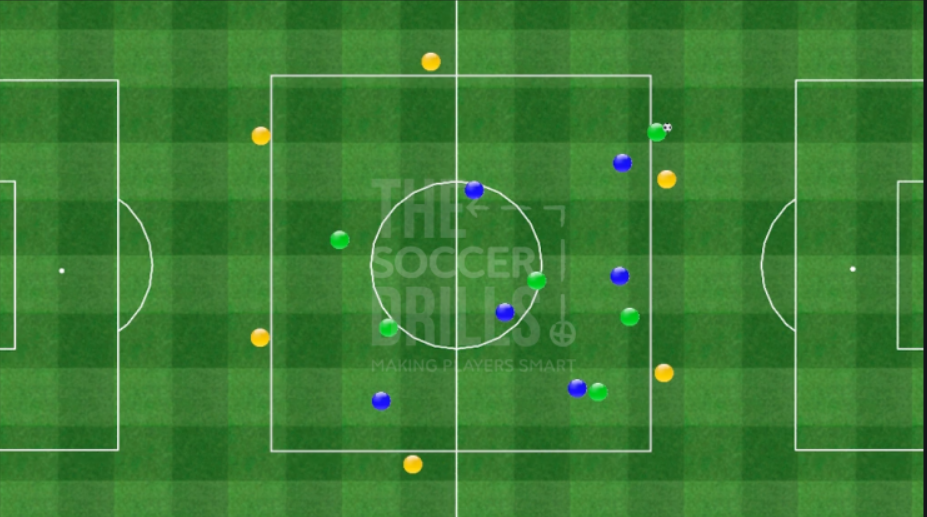
Offensive and Defensive Transition 3 Teams
To practice both the momentum when losing the ball and when winning it back is key. It makes us be better on the offensive and defensive transition. We will use this drill as a tactical situation to activate the defenders’ press after losing the ball and for the team that has just win the ball back to play quick and easy.
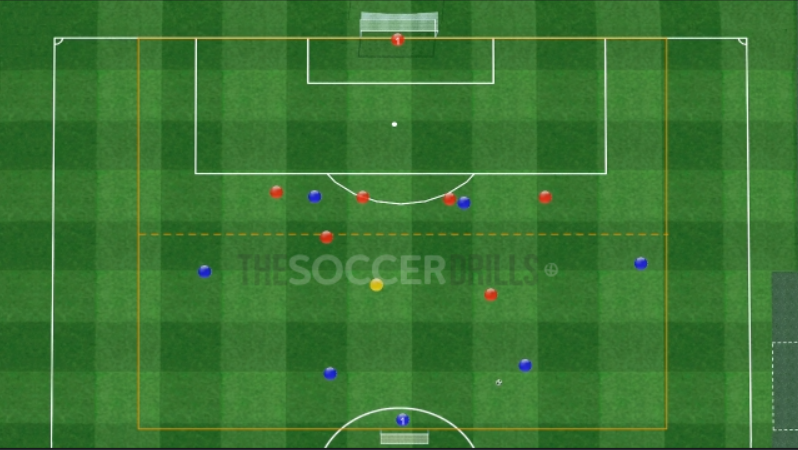
Numerical Advantage and Zonal Marking
A partial structure with a specific work for the defensive players. What we used to do with boring and ineffective attacking actions against the defenders, we do it now with a useful and attractive game for the players.
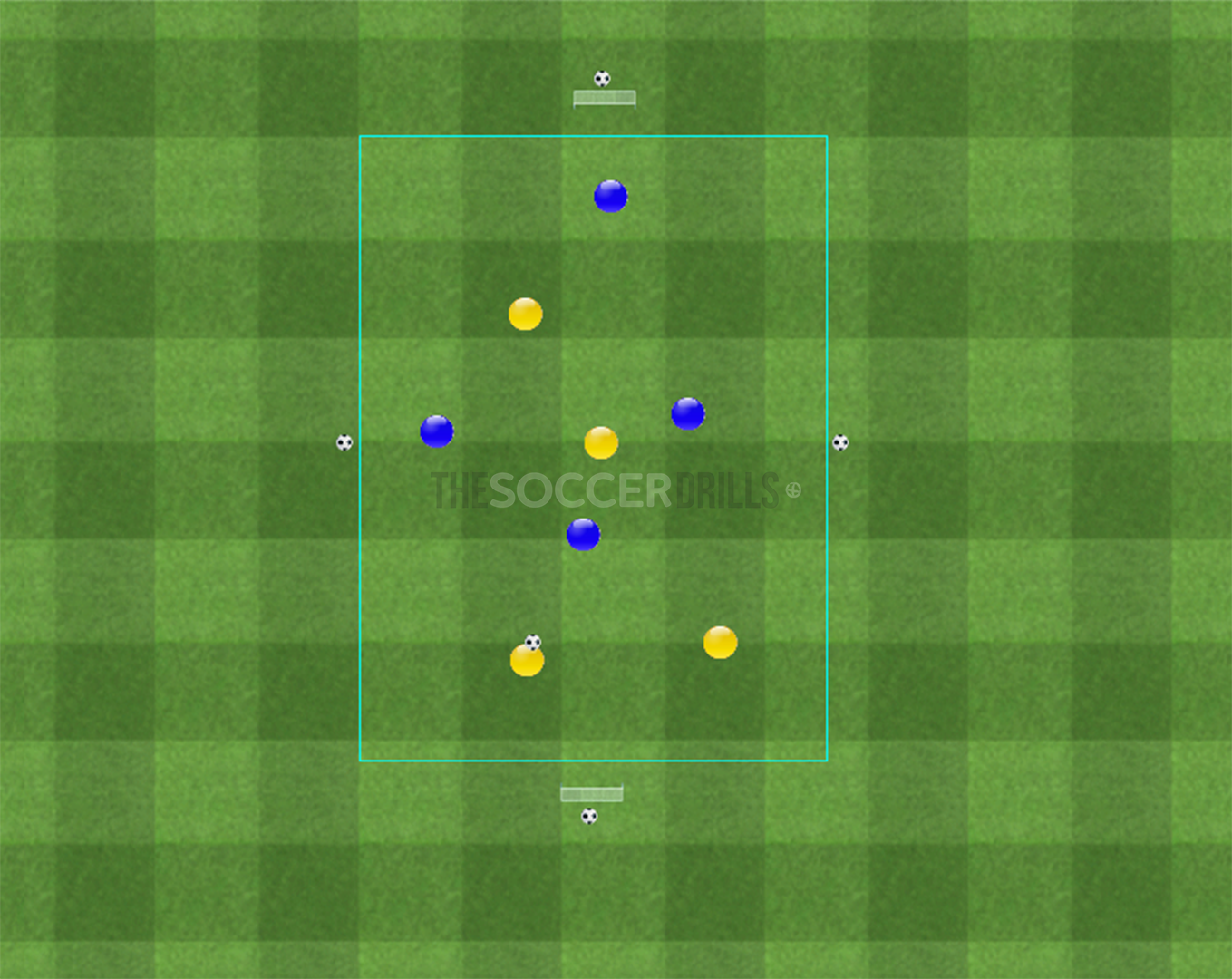
Numerical Superiority/Inferiority (4vs3, 3vs2, 2vs1,…)
To identify superiority and inferiority for a right and quick decision making both offensively and defensively is a really fun drill for all ages.
Possession + Finishing
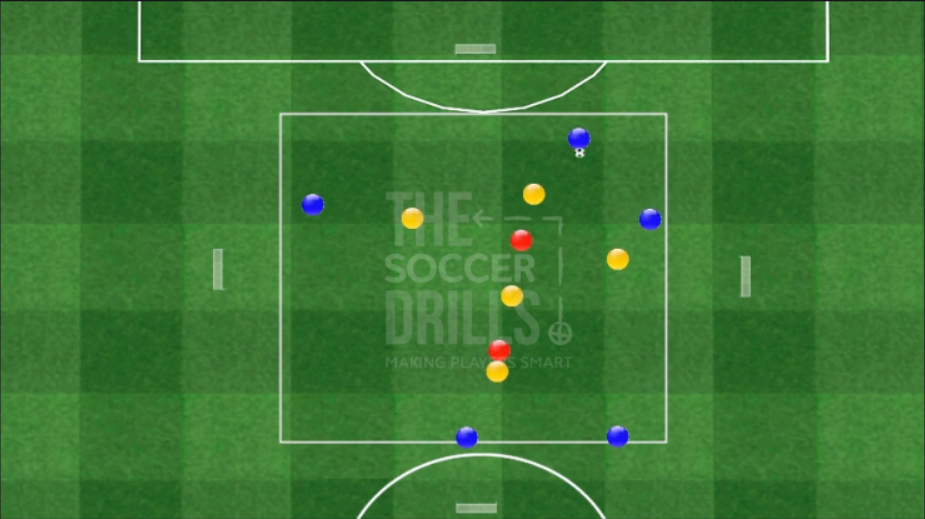
For the team that has won the ball back, is key to give support, to make runs to lose the marker and to look for the free men. For the defenders, the key is to press the player on the ball, to defend the passing lines and to identify the free men.
Offensive Vigilance and Free Man
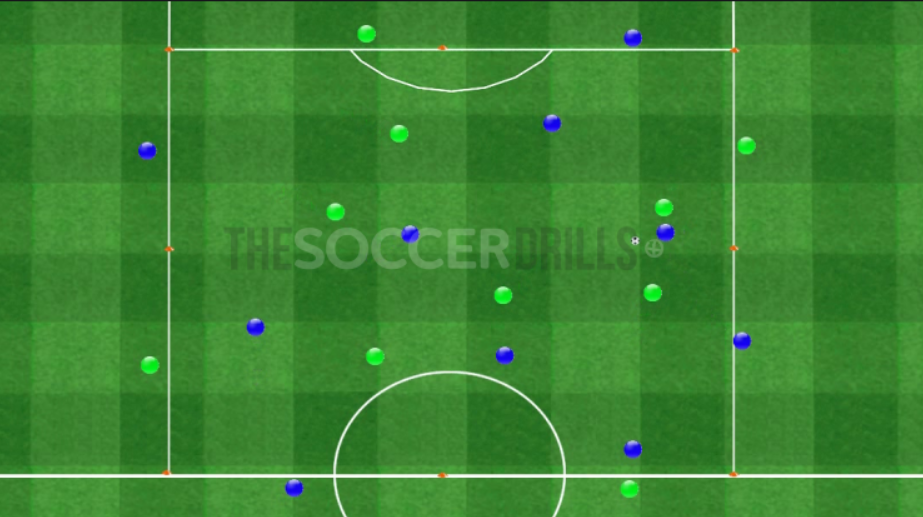
A dynamic and safe way for attacking is either to find the third man or to be aware of where the defenders are (offensive vigilances). At the same time, you will have to find the appropriate distances so your team not always pass the ball to the closest players but also finds the mid-distance players, with the objective of braking the lines. In this drill, the defensive players practice the moment of activating the pressing in a coordinated way.