

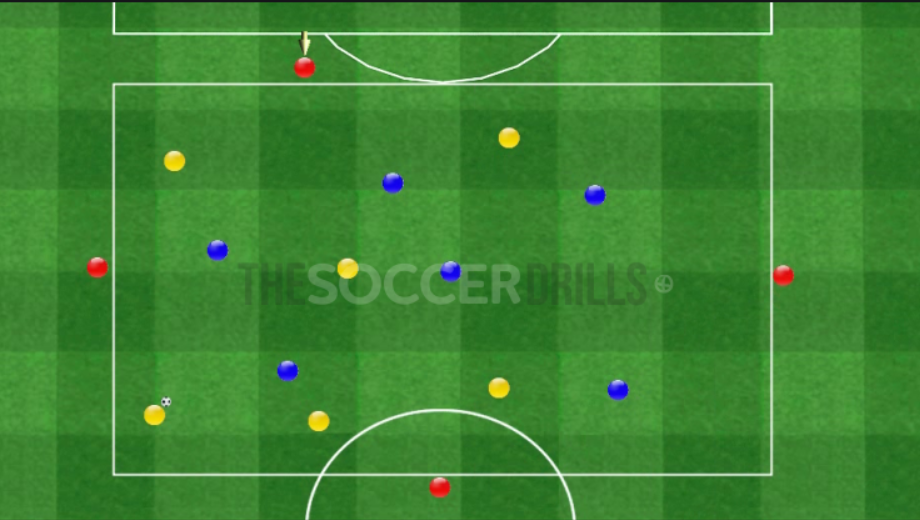
Supports: Superiority/inferiority
Ball retention, body orientation (One of Guardiola’s biggest obsession) to receive the ball from the exterior neutral player who has advantage through the guided discovery learning method. The defensive anticipations will make the attackers be on the right body shape to retain the ball and switch the play.
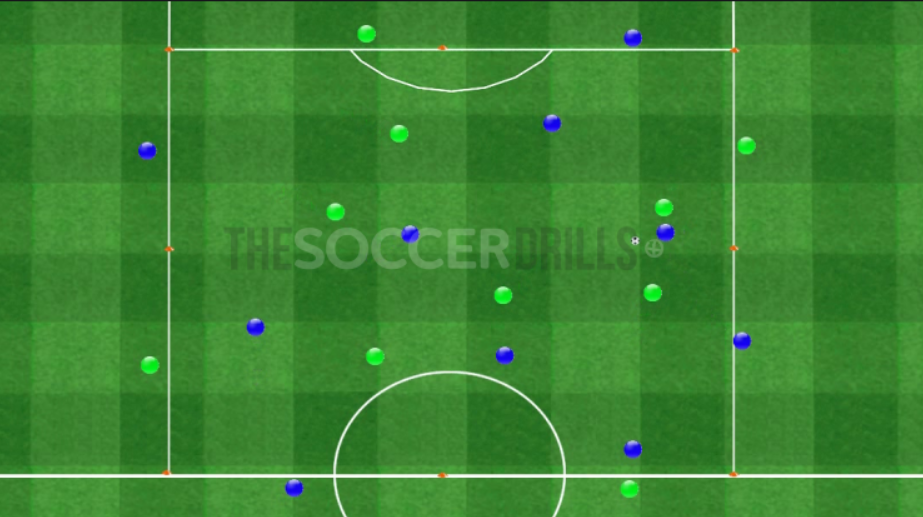
Offensive Vigilance and Free Man
A dynamic and safe way for attacking is either to find the third man or to be aware of where the defenders are (offensive vigilances). At the same time, you will have to find the appropriate distances so your team not always pass the ball to the closest players but also finds the mid-distance players, with the objective of braking the lines. In this drill, the defensive players practice the moment of activating the pressing in a coordinated way.
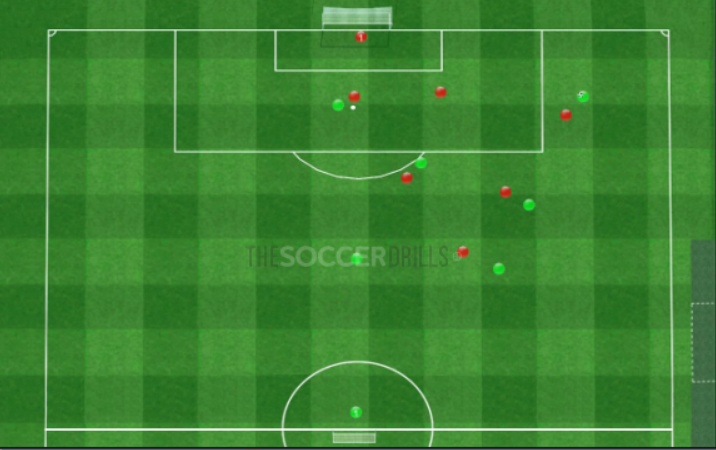
Conditioned Game in reduced space: Generate Finishing Options
The tactical finishing is the coordination of the last technical (Pass, dribble, feint) and tactical (check in and away, offensive timing etc) actions. The only useful way for practicing them is in a real situation and, in this case, adding a provocation rule which will improve the decision-making of your team when finishing.
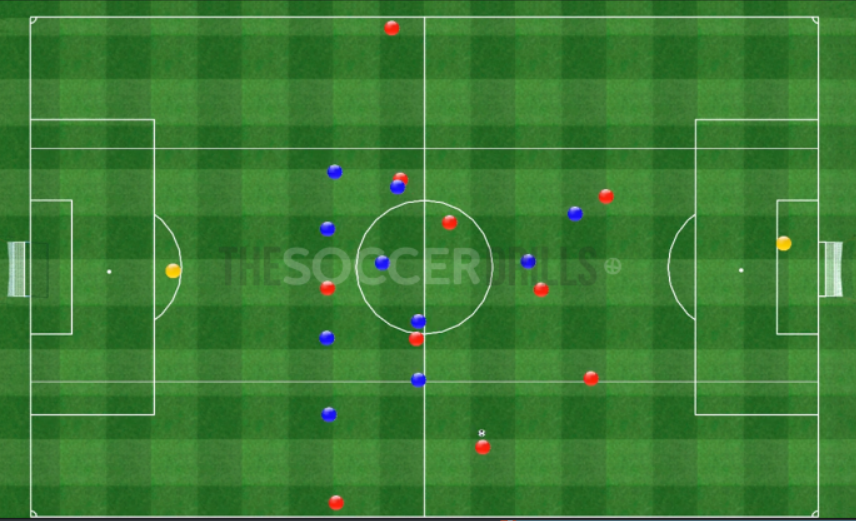
Field with 3 zones: ball circulation + scoring
Both the speed of play and the attraction of the rivals in order to free the farther players are important in order to attack. We will have to do shiftings so the rival has to change its position.
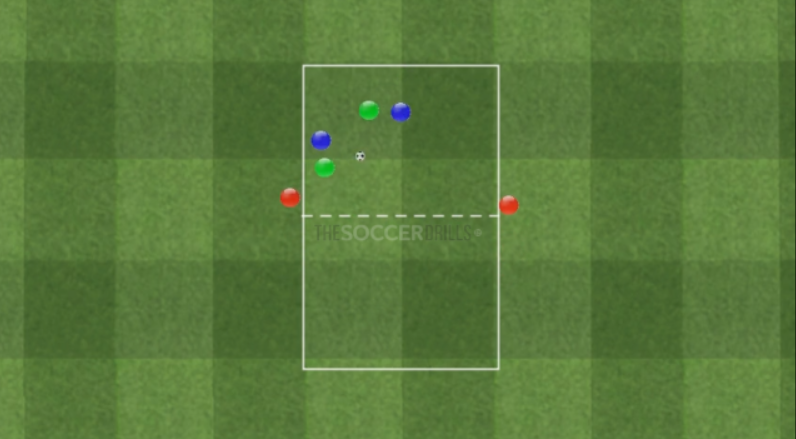
Give and Go, Coverages, 1v1 on distance
A partial structure which will require a lot of defensive and offensive tactical concepts, such as support, one-two’s, coverages, defensive exchange, press, body shape, defensive orientation, defensive and offensive timing etc.
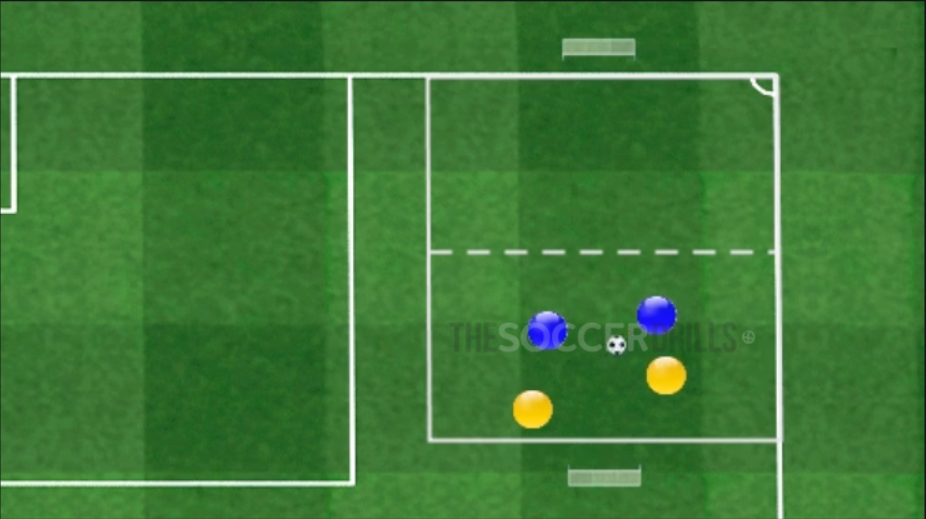
Small Sided Game Pressure after losing possession
Small sided tactical game in which we will give an extra value to two key momentums of the game: When we lose the ball and when we win it back. The transition level of our players will hugely increase.
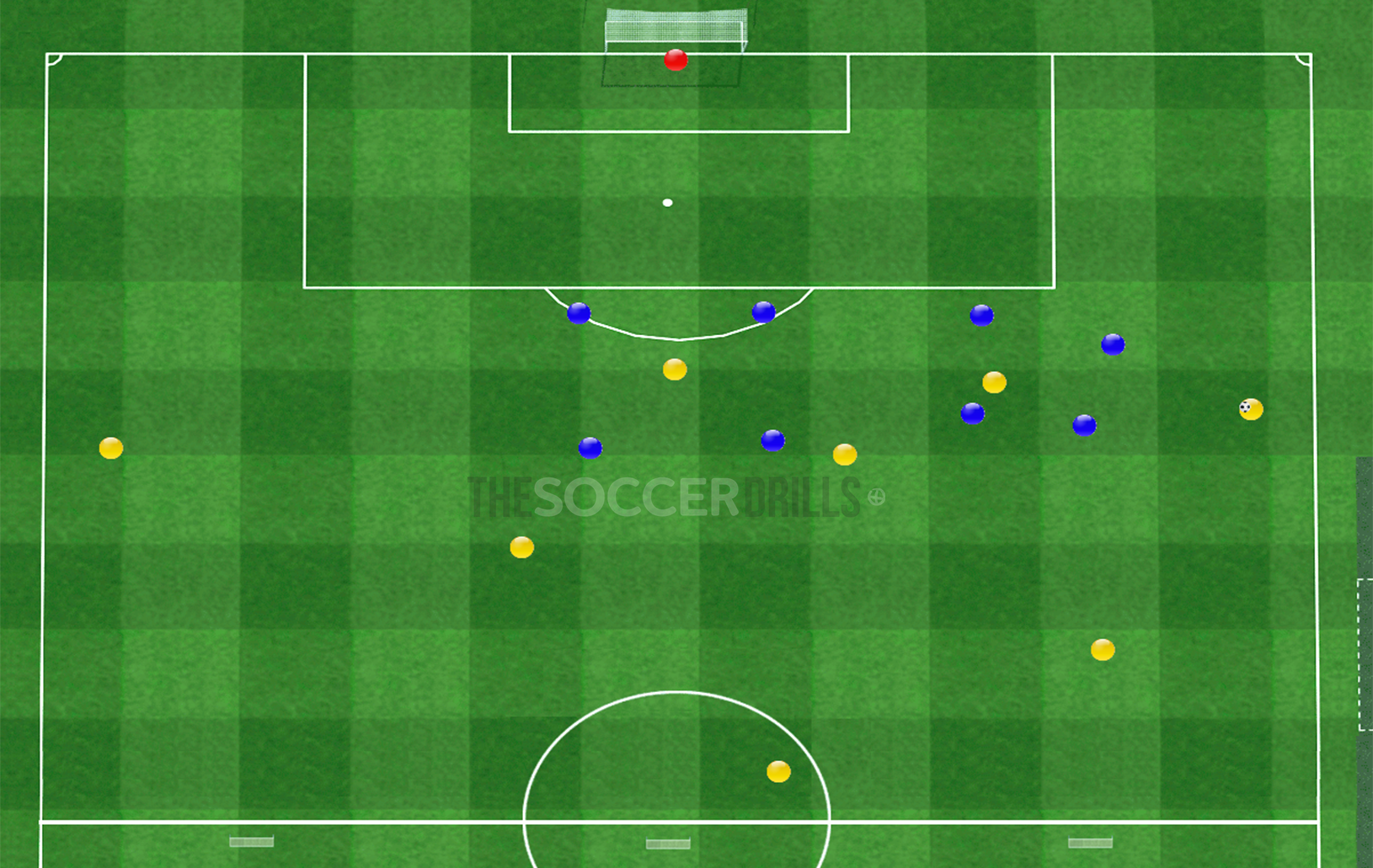
Defensive Line and Midfield
The fact of facing offensive freedom (continuous decision making) to two defensive lines will develop multiple defensive tactical concepts
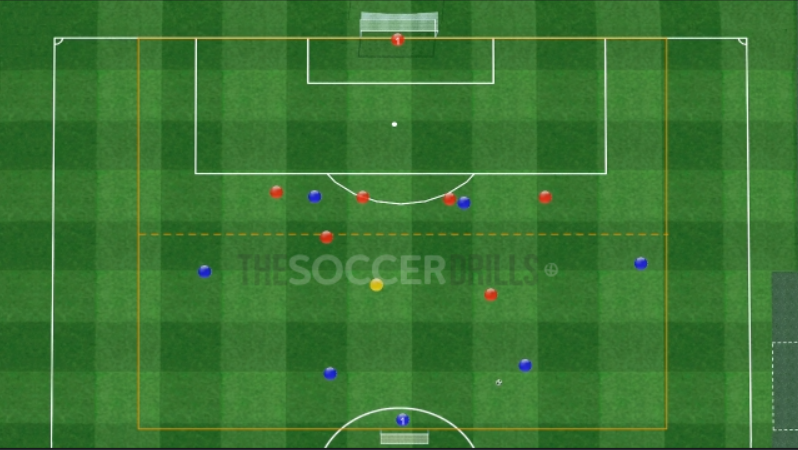
Numerical Advantage and Zonal Marking
A partial structure with a specific work for the defensive players. What we used to do with boring and ineffective attacking actions against the defenders, we do it now with a useful and attractive game for the players.
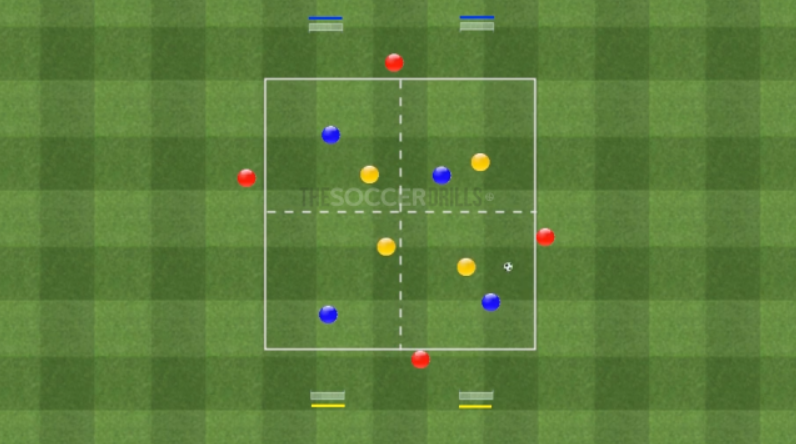
4 Squares – Positional Game – 4 Goals
A tactical polarized drill based on the rational occupancy of the field. This is a good introduction to the position game for different playing systems.
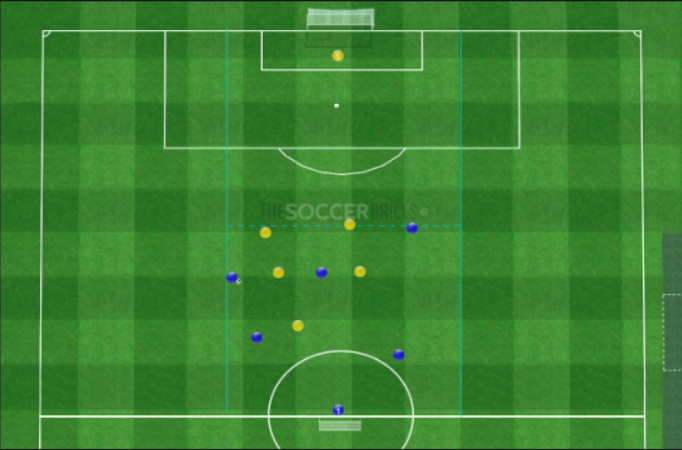
Dropping Back and Counterattack Vs Offensive Vigilance
The unhooked players are very important players in the offensive and defensive transitions, but, they are even more important in the vigilances previous to those transitions. We should practice how to use them to attack and how to defend them.