

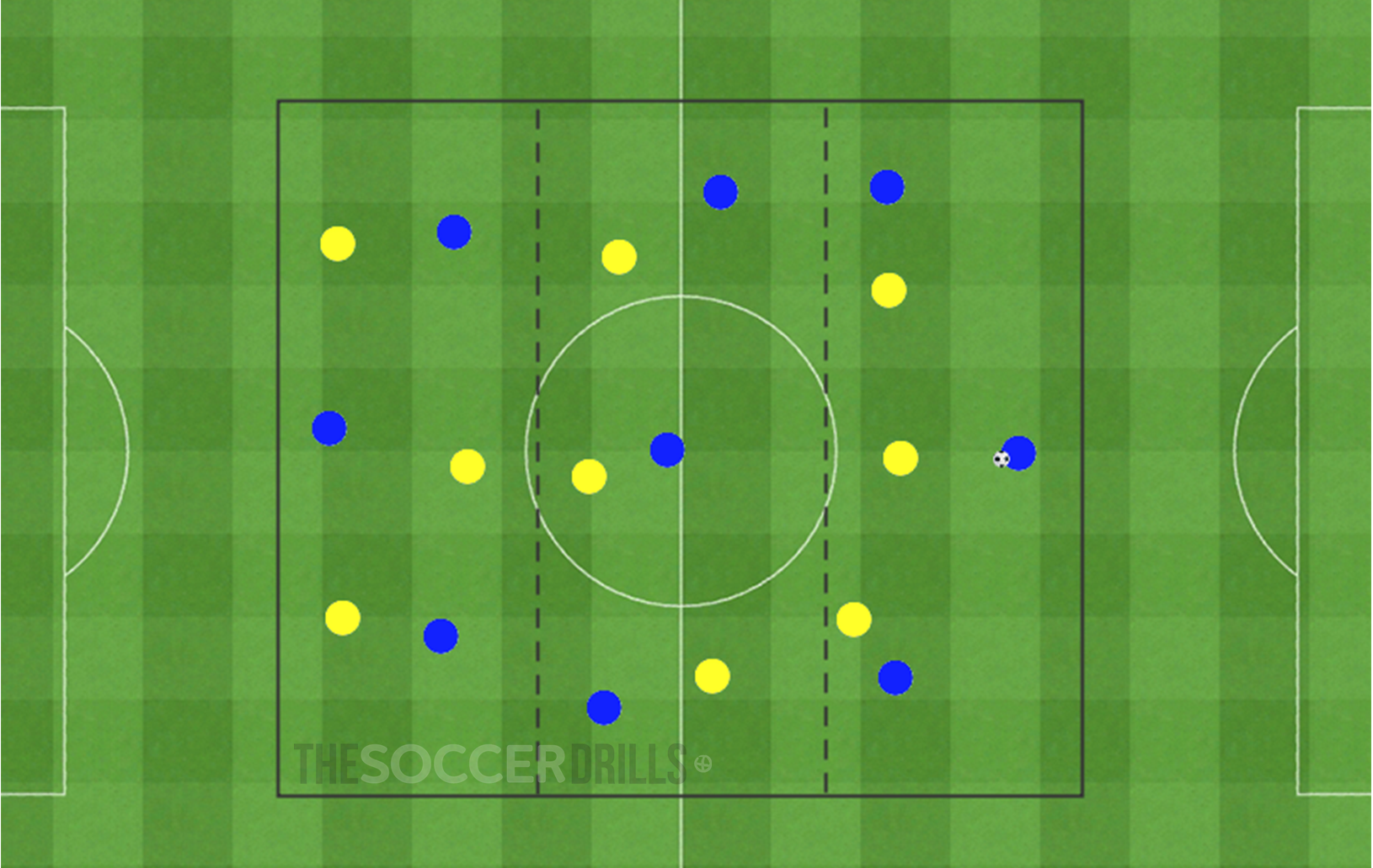
Understanding of the game
Tactical situation to improve the decision making about when to create a numeric superiority or when to keep being a support in an intermediate distance.
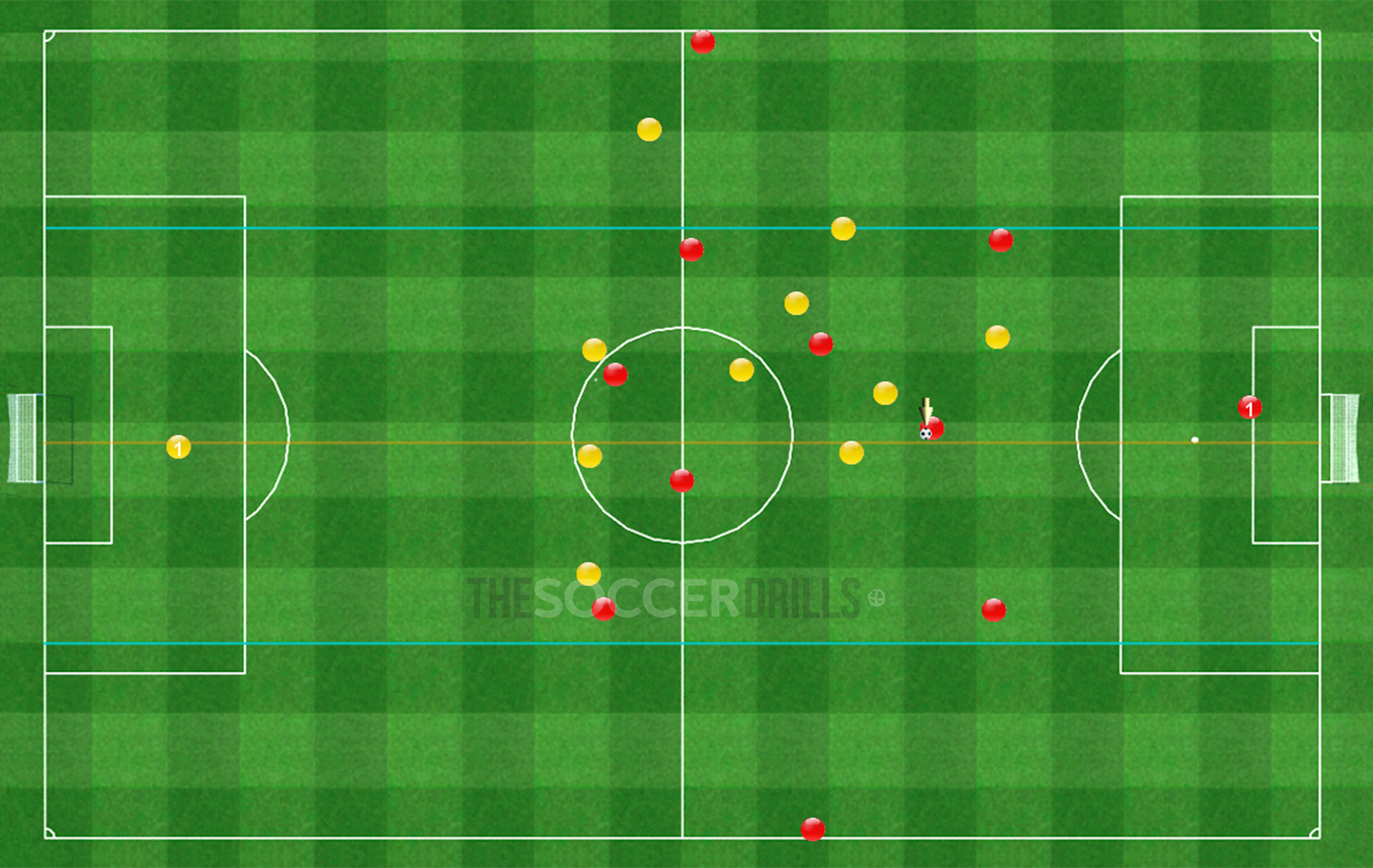
Conditioned Game: Shifting and Intensive Pressing
A good pressing and a defensive balance against the position game (Sarri, Guardiola, Nagelsman), with a rule which will make the offensive players to choose the right position in order to fix the defenders.
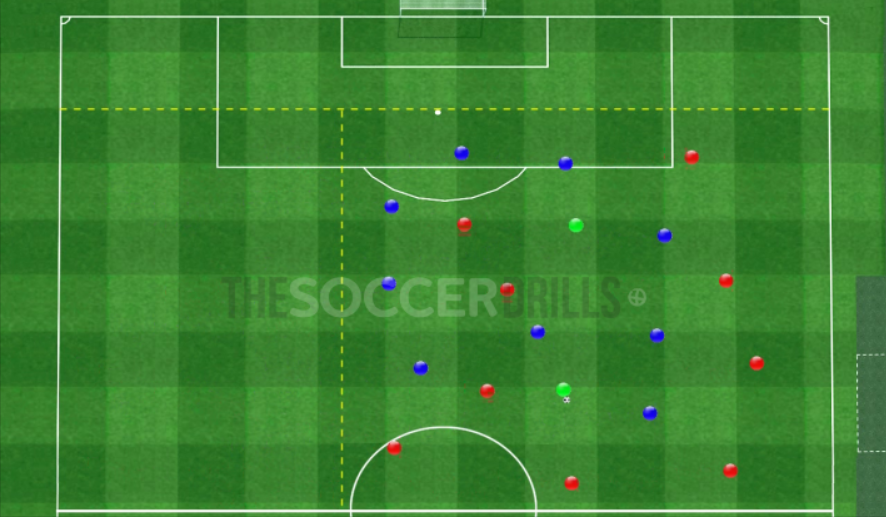
Different Spaces
We will use this tactical drill in order to identify empty spaces and to play not only with the closest players but also with the intermediate and the players farther away. This drill will make your player give the right importance to play easy passes in reduced spaces. In the drill you will practice the decision making when it comes to play quick, to move, to stay and to delay the game.
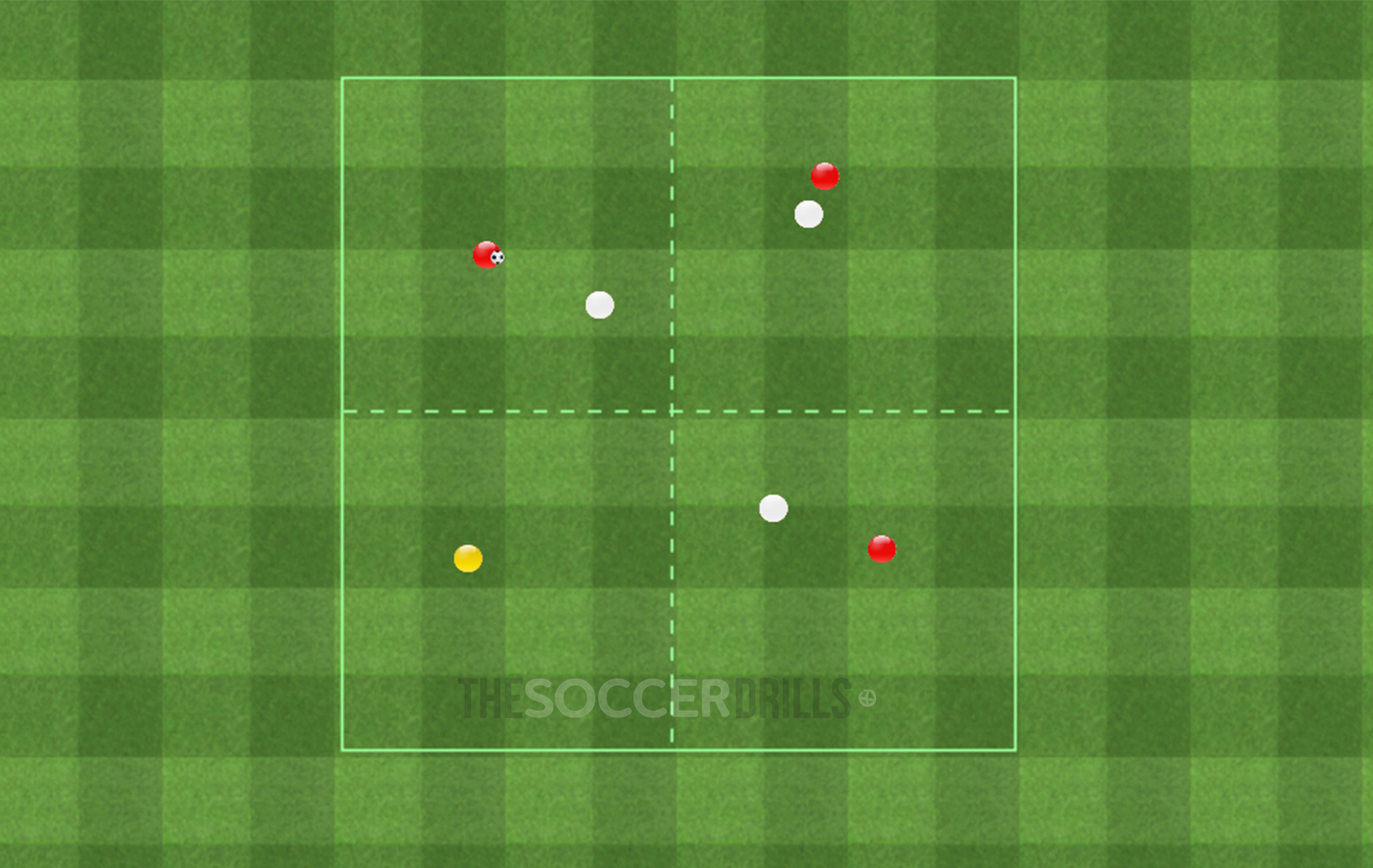
Offensive transition to a different zone (than recovery zone)
The football coaches usually ask their players to play easy and safe once they win the ball back. For doing this, it is key to put the ball away from the zone where to win the ball back
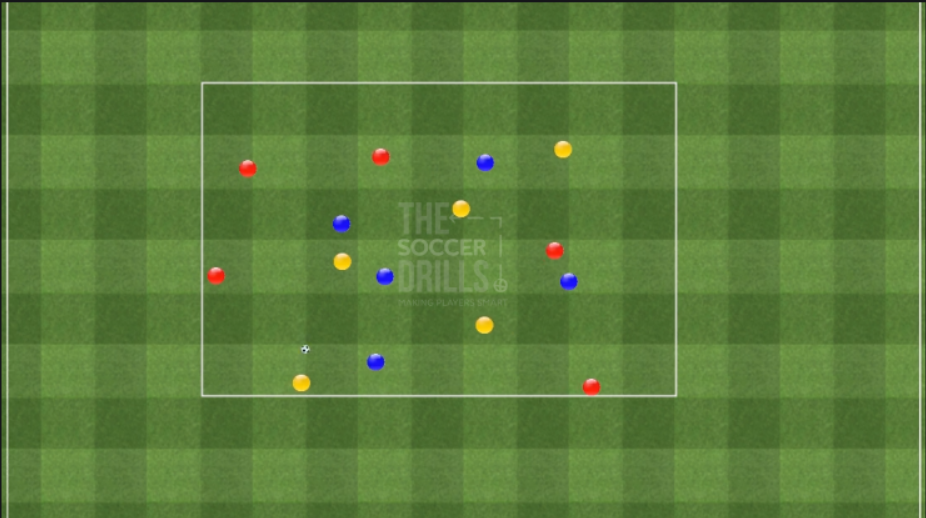
Tricolor
During the offensive transition, your team will will need to begin looking for width, permanent support from the players, a good communication etc. This offensive and defensive transition tactical drill will make your team improve this exact momentum of the game.
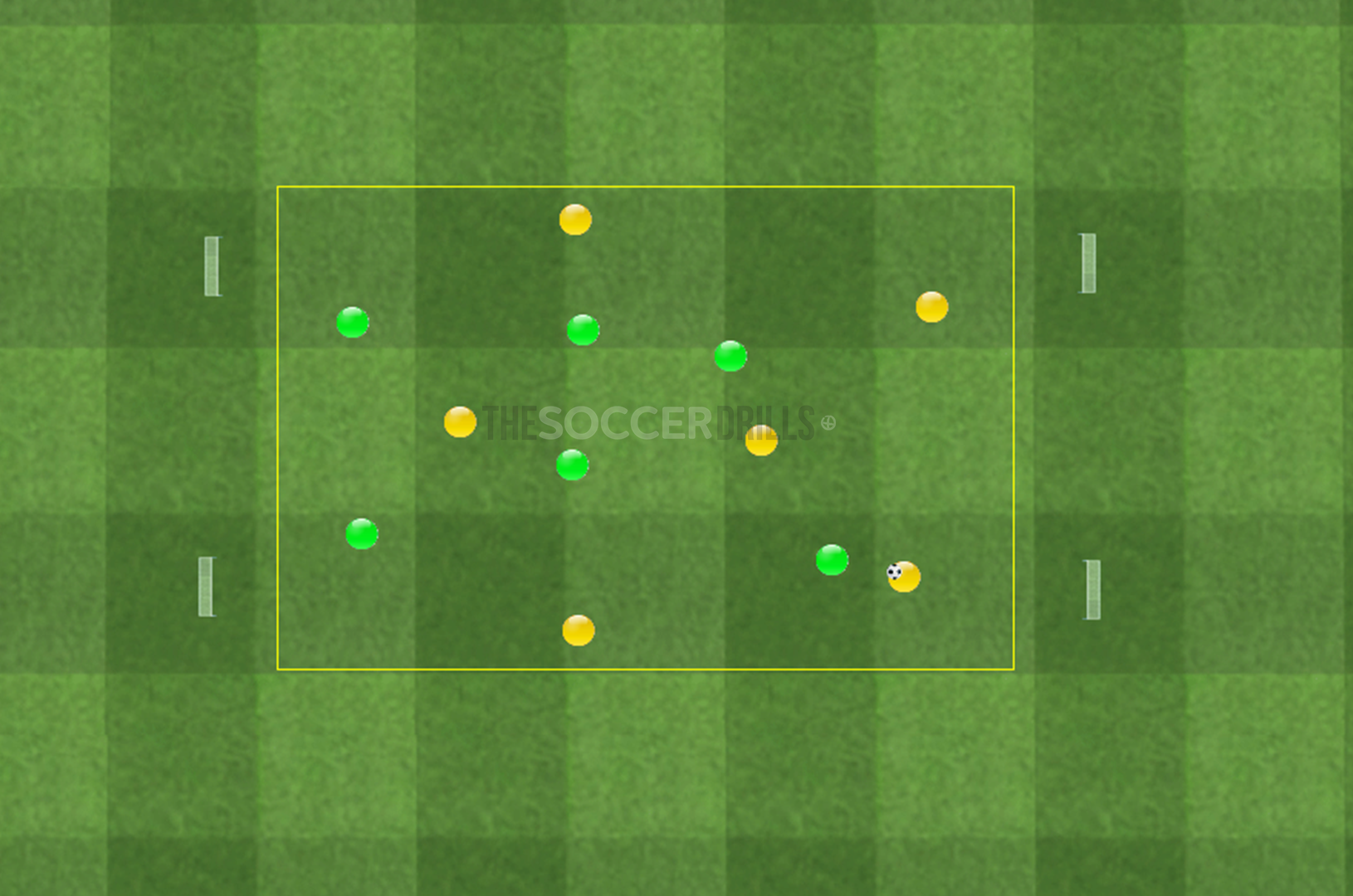
Blocking the Receiver and Defensive Transition
To get quickly to the player with the ball will help us winning the ball back easier. To do this, we will need to be good at defensive vigilances. We will practice them constantly in this drill.
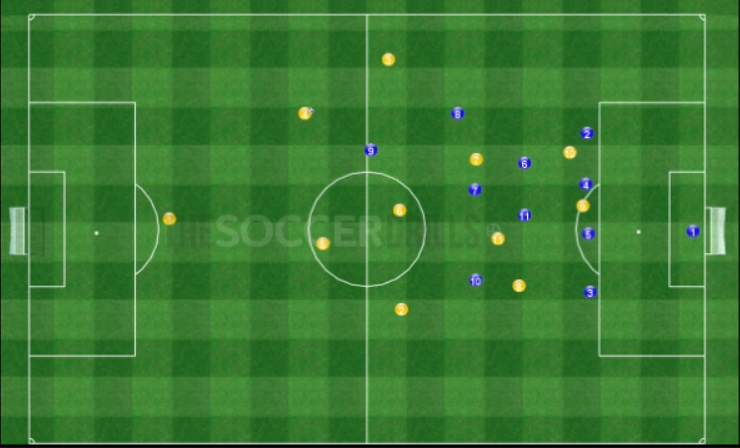
Conditioned Game: Min. 87 1-0
The ideal player is the one who manages either the offensive and defensive tactical situations. The direct attack looking for the second ball Is one of the parts of the game that the coaches need to know how to manage despite it might not be his most preferred part. As coaches, our objective has to be fo our players to learn as much as possible, not just only about what we like.
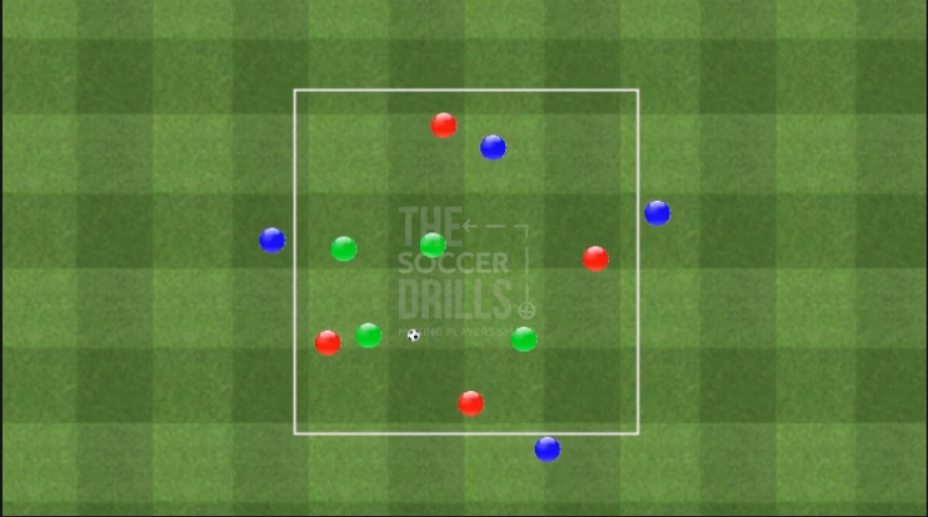
Transitions: Narrow down the spaces
The following situations are basic tactical and repeated situations in the game: The team that loses the ball has to close spaces, the team winning the ball back has to start winning width, opening up the field. You can practice this drill continuously.
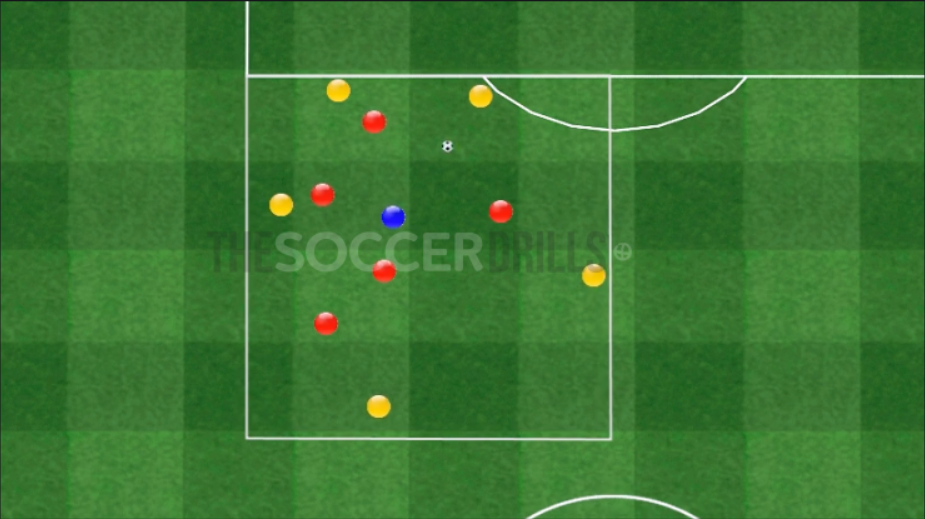
Pass to attract
In this drill, the players will identify the advantages of short passing when there is no opposition in order to attract the rivals and make them leave spaces behind them that will let us advance in the game. Good drill in order to improve decision making against teams that drop back and regroup intensively.
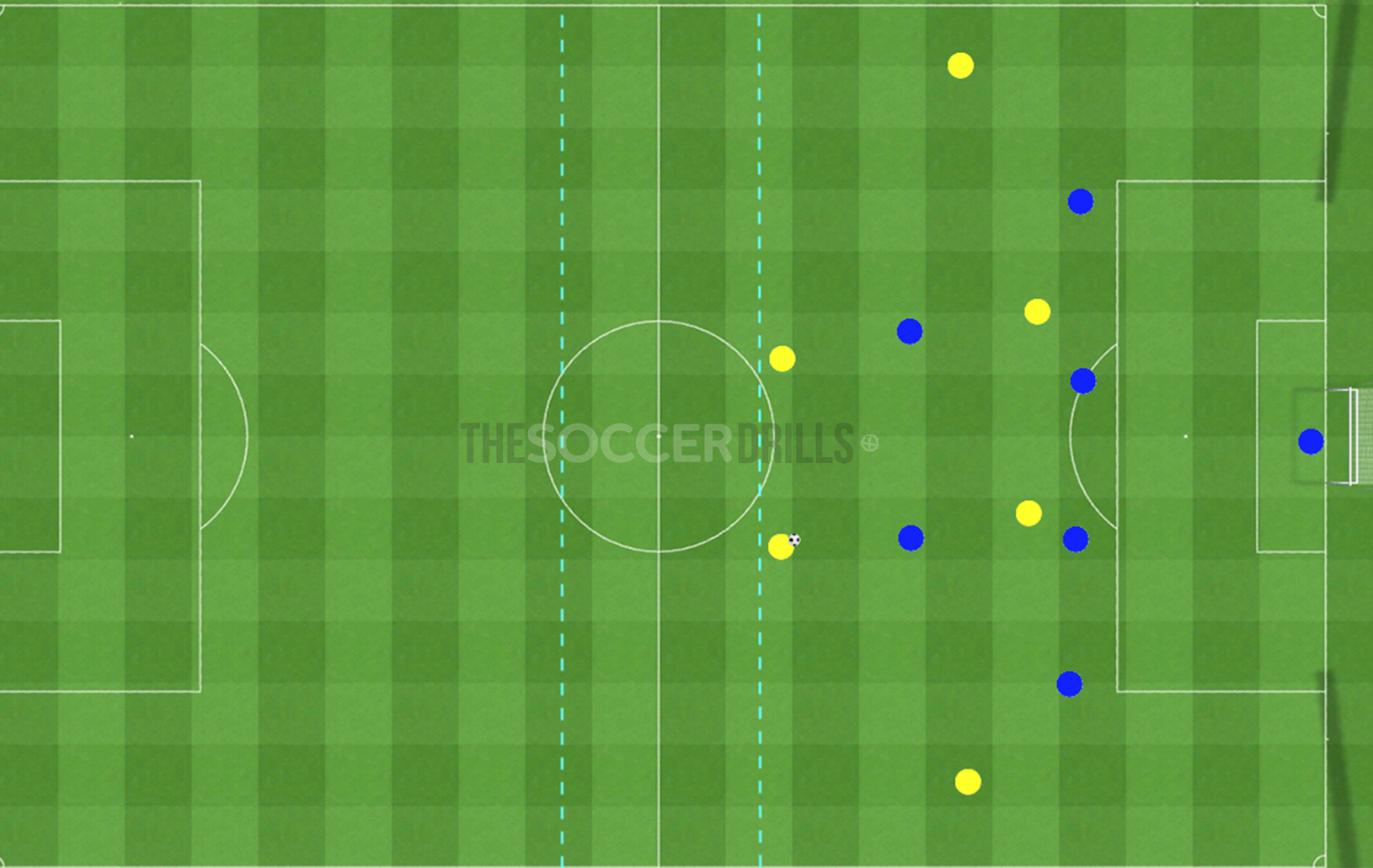
Offensive transition with the free man.
When we win the ball back when defending a team which presses us after losing the ball, we will need to connect with the free man playing behind the rivals’ back.