

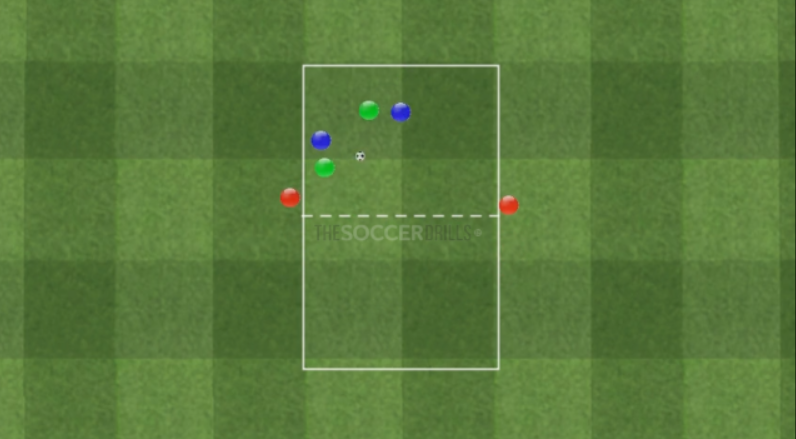
Anticipation, Man to Man Marking and Losing own Marker
It is not easy for a coach to teach the player which is the appropriate moment to make a run to lose the defender, to teach which is the speace where he has to run to, etc… what if you create a situation where the player is able to identify it and solve it by himself?
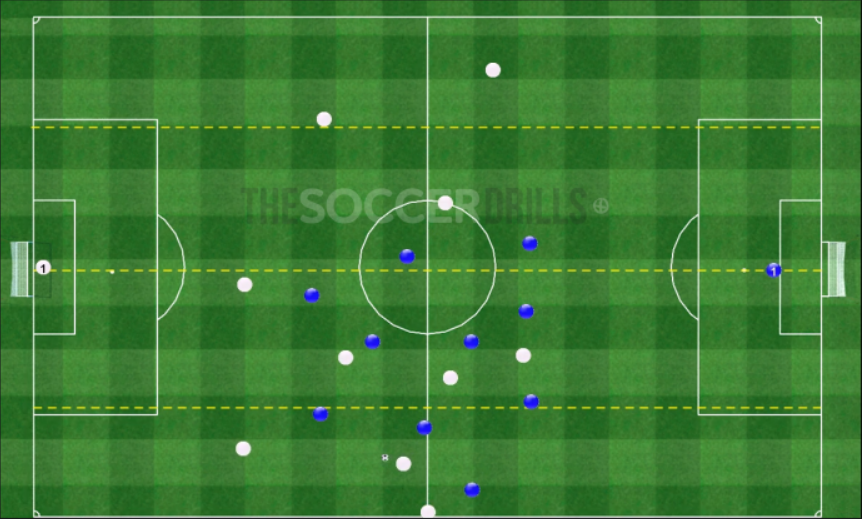
Conditioned Game: 8 Zones, Speed of Play and Change of Pace
The best way for advancing in the game is to not to repeat too many passes in the same zone. Just by setting up one rule and different zones we will be able to create the scenario where the players will discover, by themselves, the perfect offensive timing.
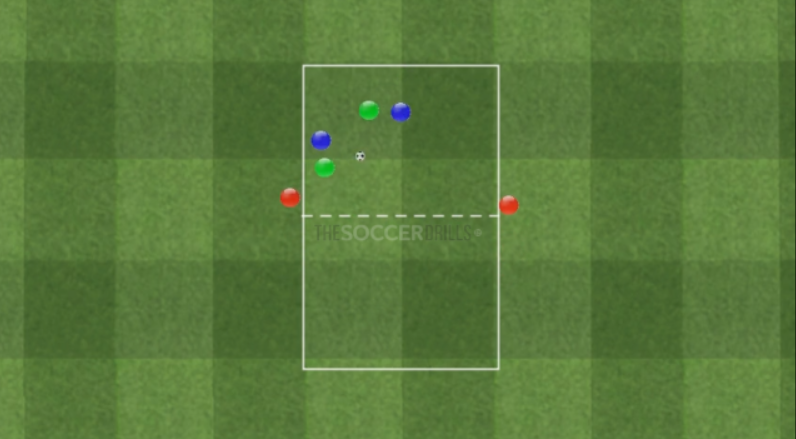
Give and Go, Coverages, 1v1 on distance
A partial structure which will require a lot of defensive and offensive tactical concepts, such as support, one-two’s, coverages, defensive exchange, press, body shape, defensive orientation, defensive and offensive timing etc.
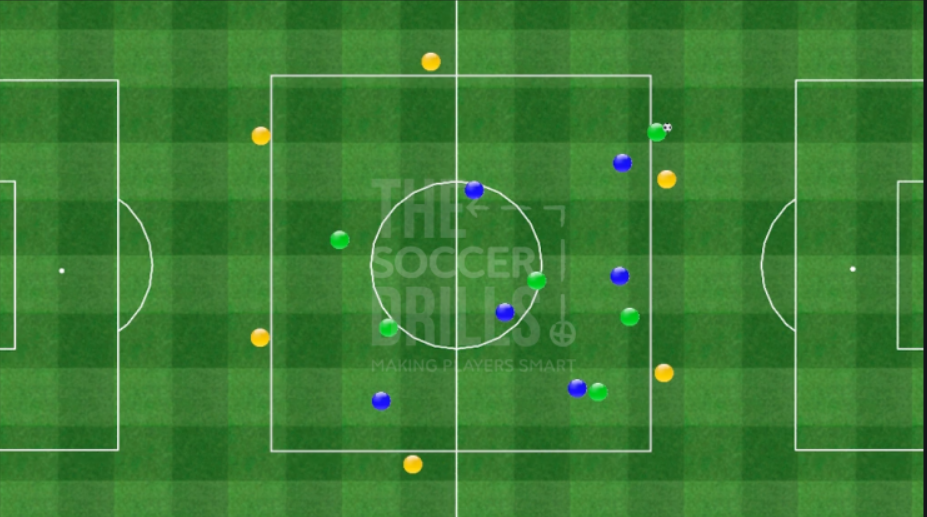
Offensive and Defensive Transition 3 Teams
To practice both the momentum when losing the ball and when winning it back is key. It makes us be better on the offensive and defensive transition. We will use this drill as a tactical situation to activate the defenders’ press after losing the ball and for the team that has just win the ball back to play quick and easy.
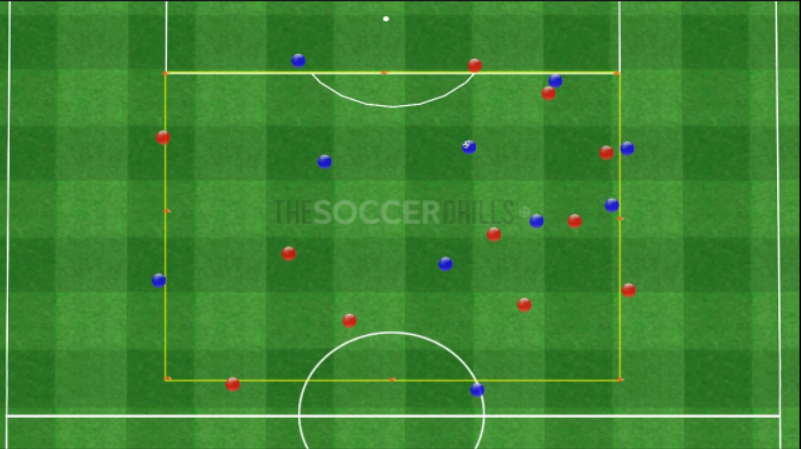
Positional Play – Speed of Play
Another offensive tactical drill to improve the position game (Guardiola, Sarri…). To play the ball facing the player who is about to receive it will allow the receiver to think before getting the ball and to speed the play up.
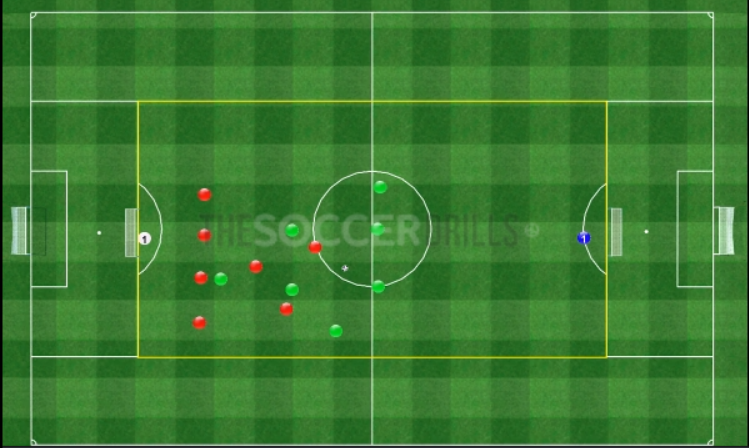
Direct Attack: Final Minutes
Maybe your team just uses the direct style of play occasionally (e.g when losing in the last minutes of a game), but it is more than likely that your team will face teams that use it during most of the minutes. To practice it in the same proportion as it is played in your competition is both correct and necessary.
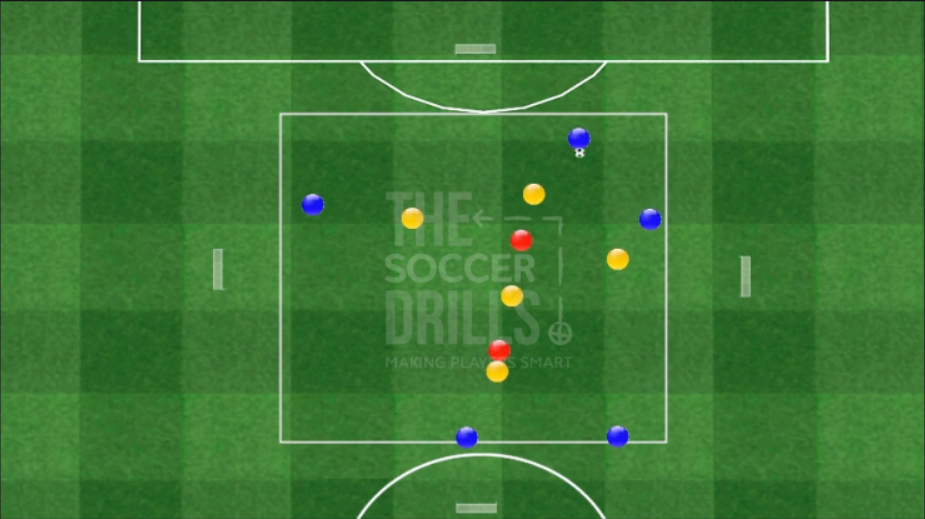
Possession + Finishing
For the team that has won the ball back, is key to give support, to make runs to lose the marker and to look for the free men. For the defenders, the key is to press the player on the ball, to defend the passing lines and to identify the free men.
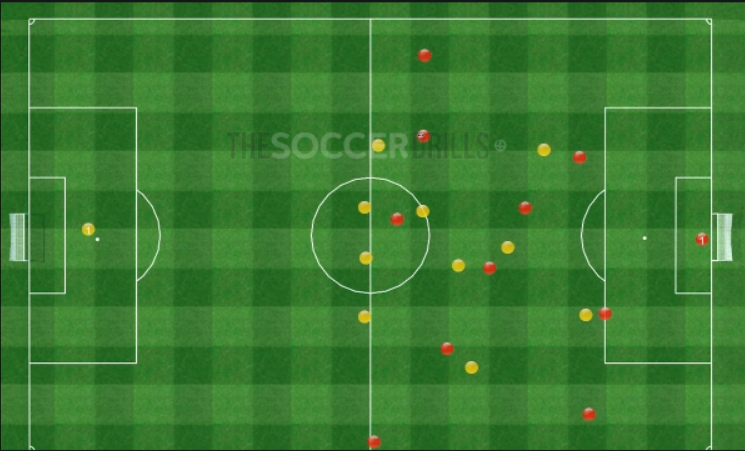
Total Pressure Vs Building up
We need some confidence in order to start a combinative building attack. To improve it, we will need to make right and wrong decisions and learn from them. In this easy drill we will be able to improve that confidence.
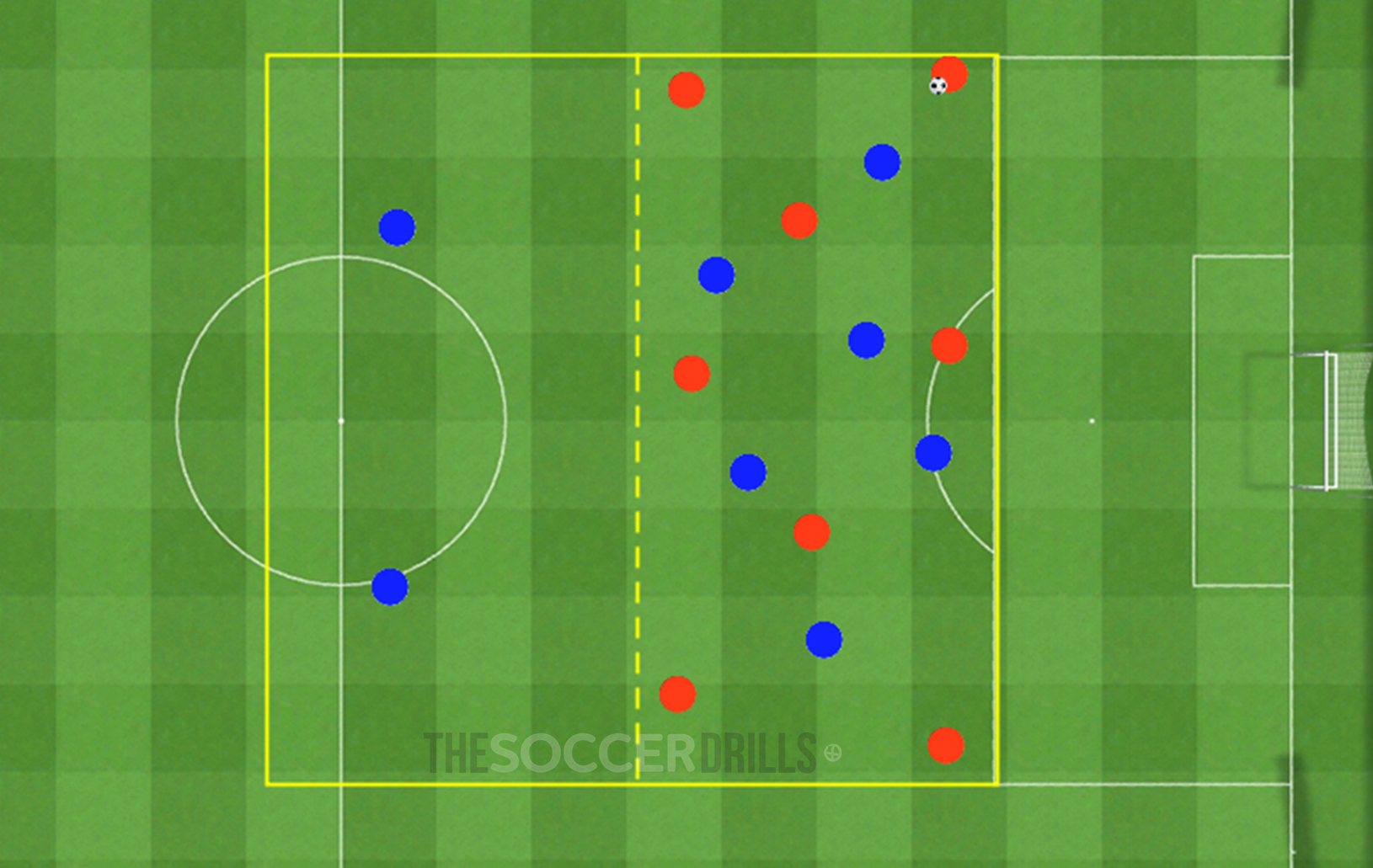
Winning the ball back and play with the players on the rival´s side.
Once the ball is won back, the first option that all the coaches like is to try to move up the field and to try to benefit from the possibility of a defensive imbalance. Let’s practice it.
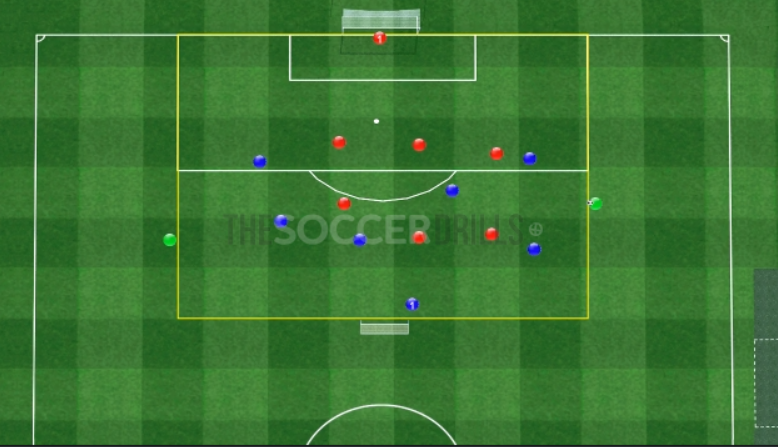
Double Box: Counterattack and pressure after losing possession
Either to advance in the game after winning the ball back or to avoid it are the objectives of a lot of styles of play. We will practice it in this intense drill in which we will make our players improve the transitions. The dimensions will be the double of the box.