

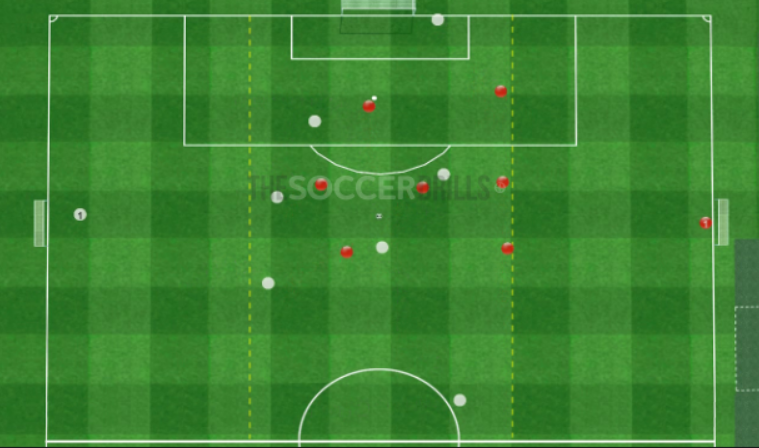
Counterattack Vs Dropping Back
There are defensive and offensive concepts which will be easy to practice in whole. A simple provoking rule will help your team practice these two concepts.
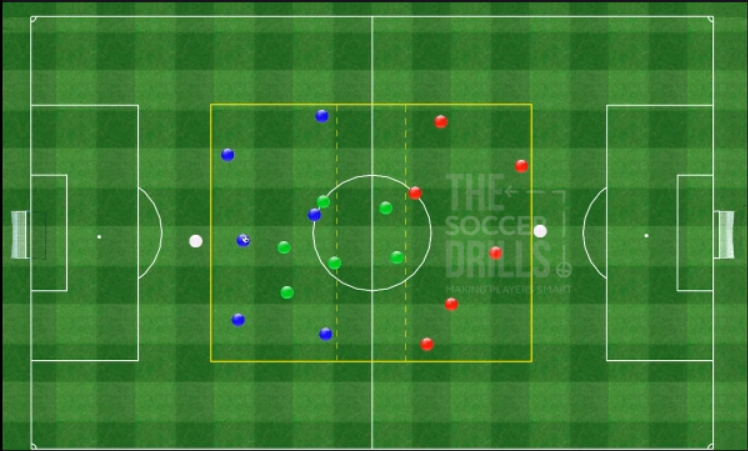
Play pressed and switch zone
To include the goalkeepers in the building drills is key for them to then do it comfortably during the games. In the drill, we will start building the game to then advance in the game overcoming the opposition high press. The defenders practice the high press and to close passing lines.
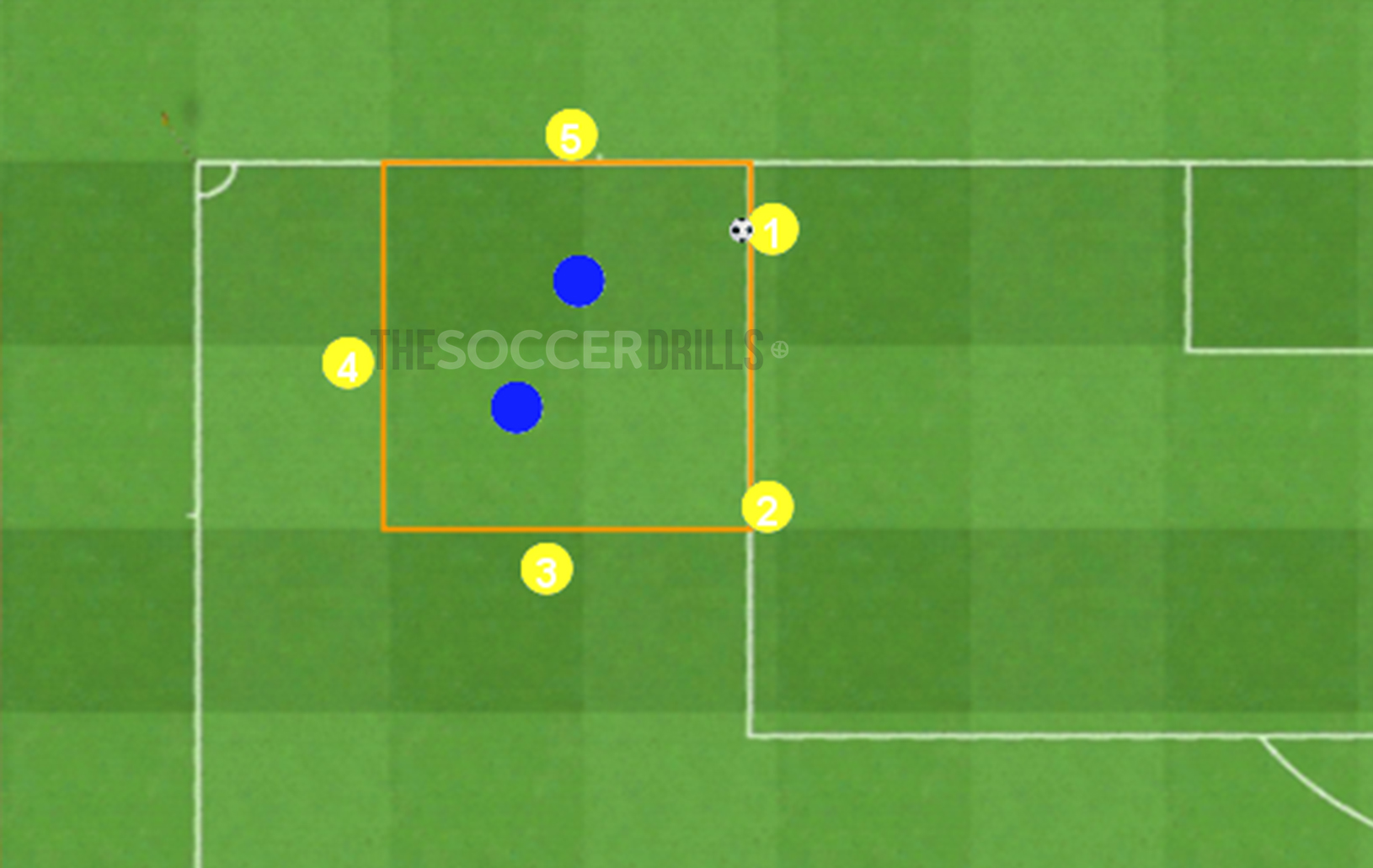
Rondo with an intense pressure (Liverpool FC)
Do you know Liverpool’s Henderson Rondo? It is an interesting conditioning in order to reach a maximum pressure from the first pass.
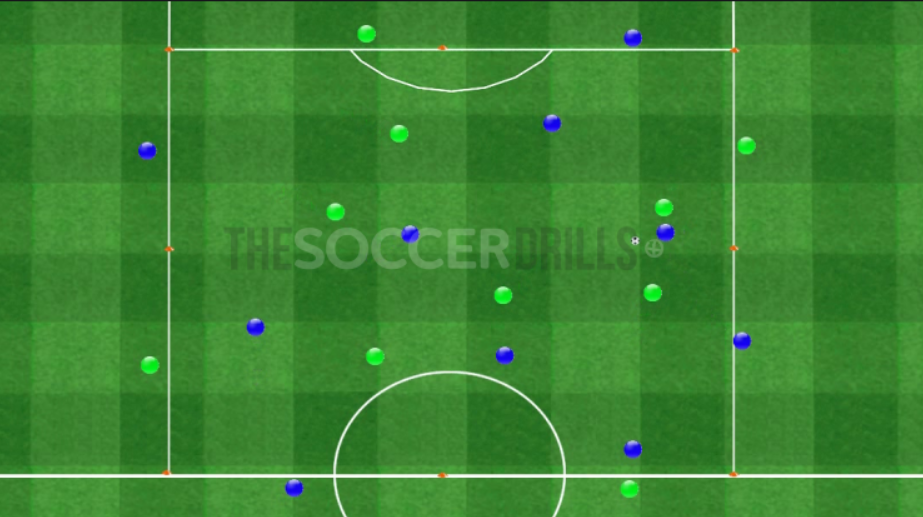
Conditioned Game: Offensive Transition and Stretching
When in an offensive transition, whether to progress quickly or to look for support to start a combinative attack is an important choice that has to be practiced.
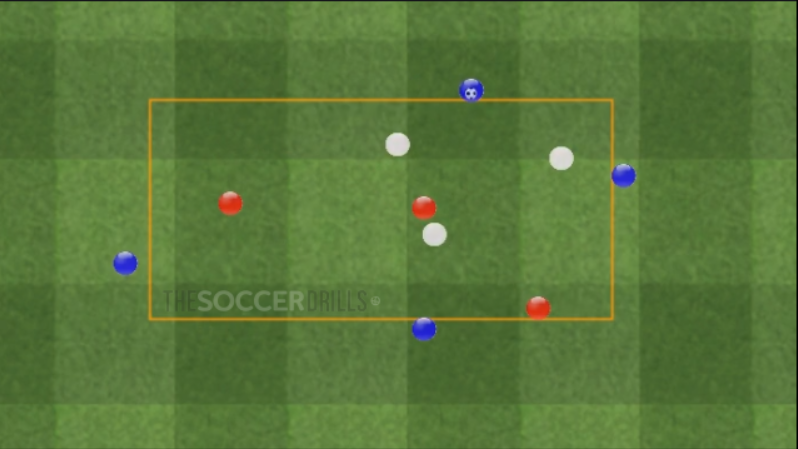
Multi-Offensive Work
A very complete tactical drill both at an offensive and defensive level. The players have to make a lot of decisions in a very limited time.
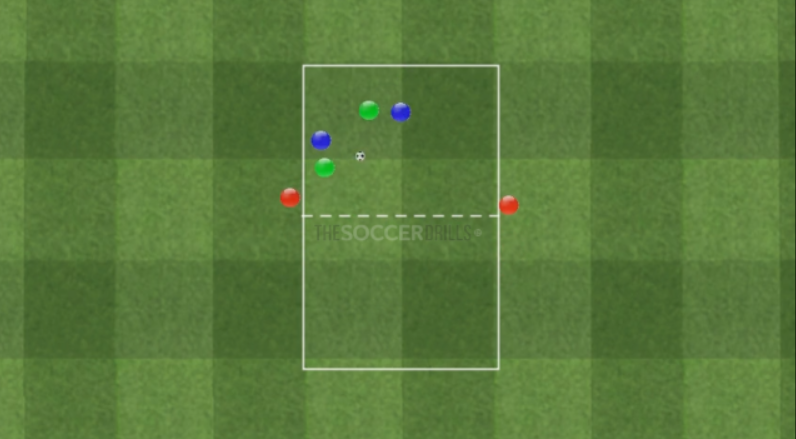
Anticipation, Man to Man Marking and Losing own Marker
It is not easy for a coach to teach the player which is the appropriate moment to make a run to lose the defender, to teach which is the speace where he has to run to, etc… what if you create a situation where the player is able to identify it and solve it by himself?
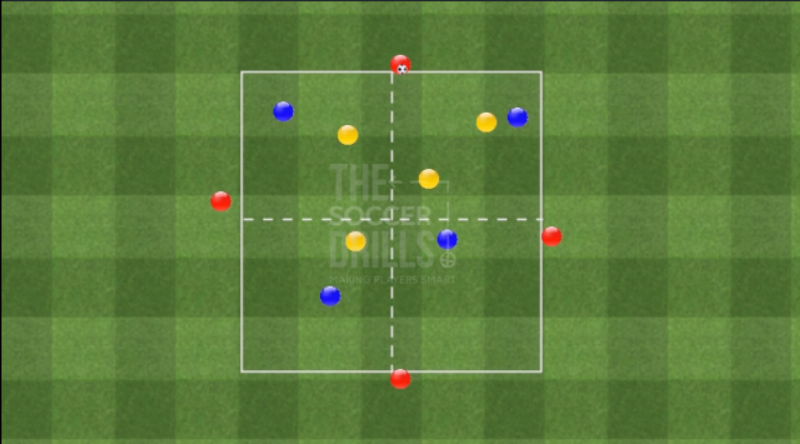
4 Squares – Positional Game
To occupy the field rationally is one of the main objectives of the coaches at early ages. This is a good introduction to the position game for different playing systems.
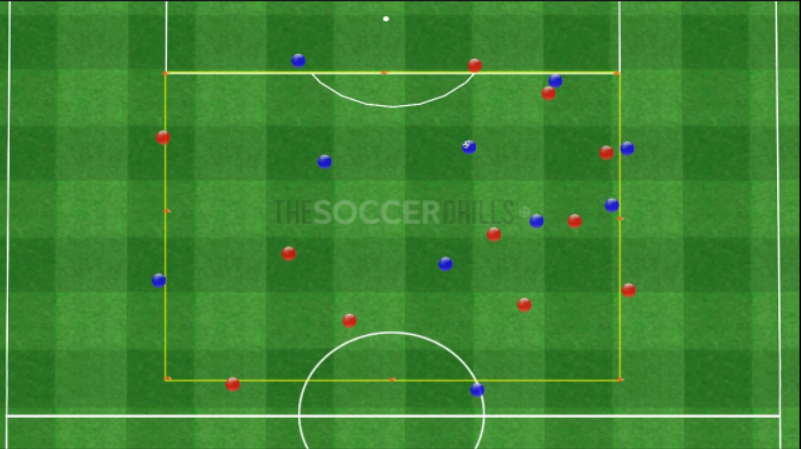
Positional Play – Speed of Play
Another offensive tactical drill to improve the position game (Guardiola, Sarri…). To play the ball facing the player who is about to receive it will allow the receiver to think before getting the ball and to speed the play up.
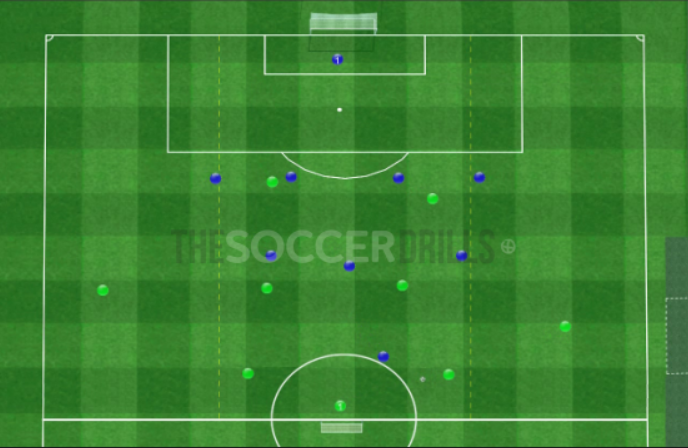
Speed of Play and switching the play
How many times do we listen the coach tell this player to do not repeat a pass when he has already done it? Is this useful to say it once the player has already committed the mistake? Would not be better to implement a drill with an easy rule which creates a offensive habit and improves the player decision-making?
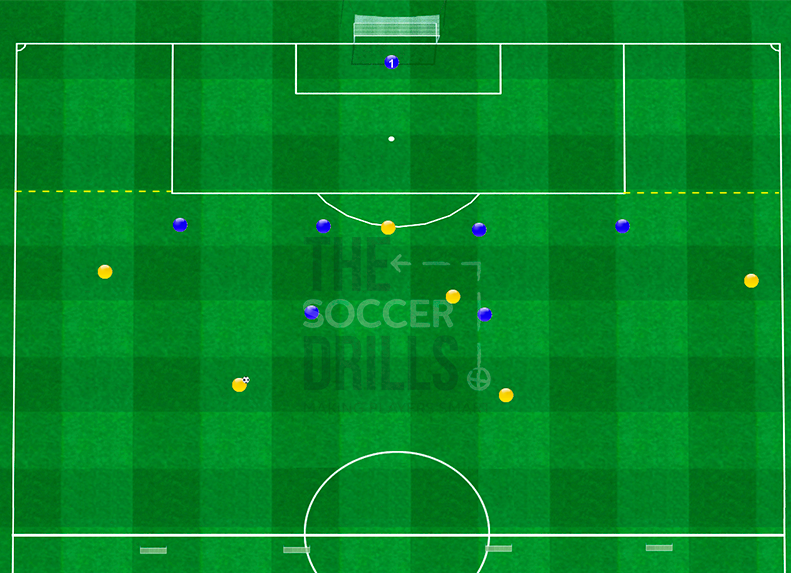
Defensive support and Shifting
To attack a team that has already came back in shape and uses the counterattack as their way of attacking. High level of learning in vigilances and in offensive and defensive transitions.