

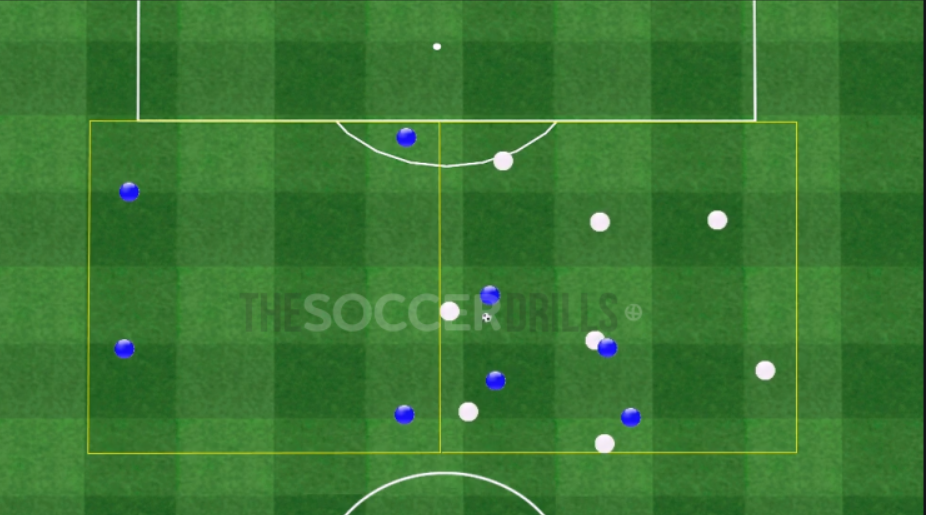
Speed of play + getting the ball away of recovery zone
At the beginning of the offensive transitions, just after getting the ball back, we should play quick and simple in order to bring the ball to the empty spaces. In this drill we will be faced to different situations similar to game situations.
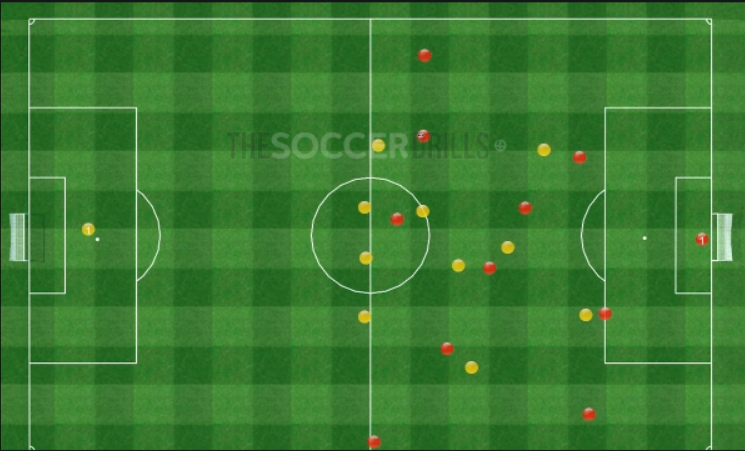
Total Pressure Vs Building up
We need some confidence in order to start a combinative building attack. To improve it, we will need to make right and wrong decisions and learn from them. In this easy drill we will be able to improve that confidence.
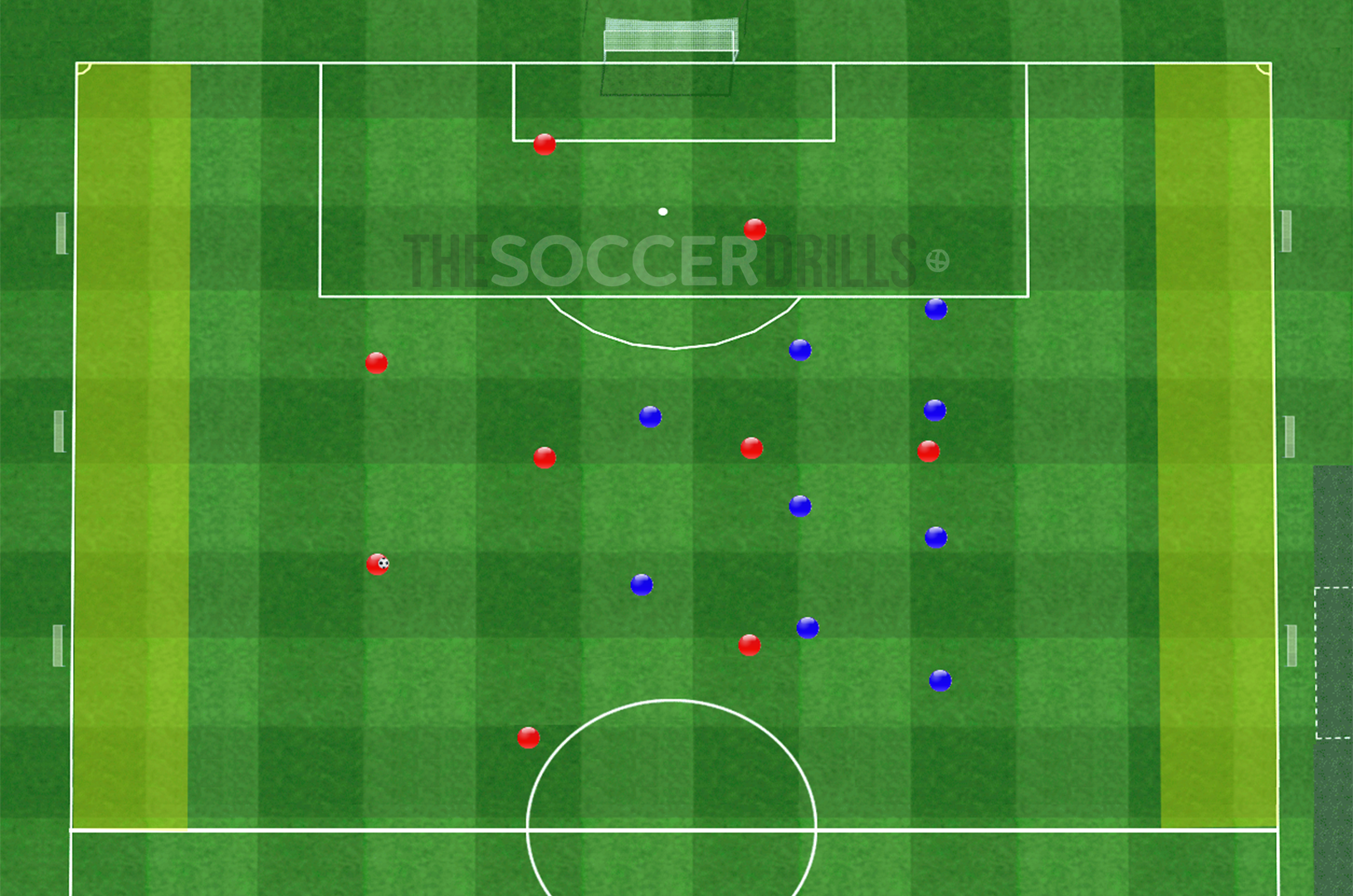
Marking and Vigilances Vs Losing the Marker and Finishing
In this drill you have to set up a rule that will make your offensive players improve the runs for losing the defenders and will make the defensive players improve the vigilances and the individual marking.
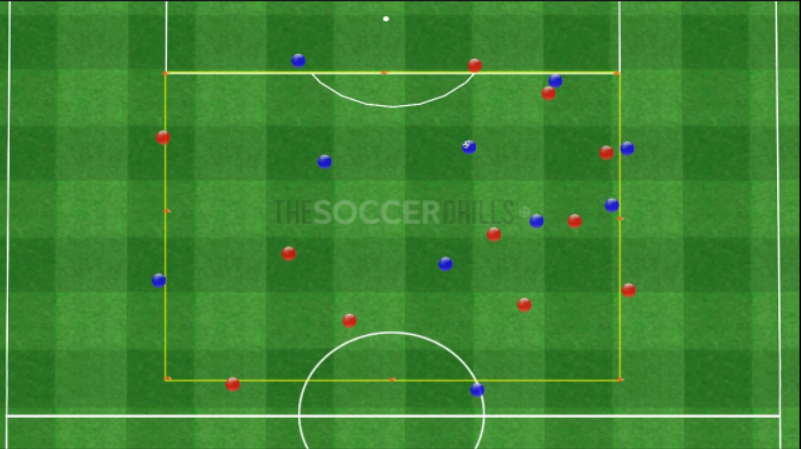
Positional Play – Speed of Play
Another offensive tactical drill to improve the position game (Guardiola, Sarri…). To play the ball facing the player who is about to receive it will allow the receiver to think before getting the ball and to speed the play up.
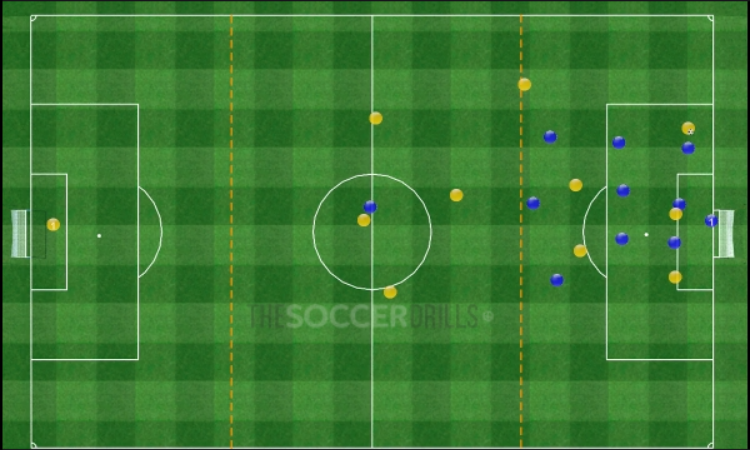
Conditioned Game: Defending in middle block
For a slow defender, the body orientation when facing a through ball is key in order to beat a faster forward. Your player’s mental quickness when making the right decision about the body shape will them improve against the through balls.
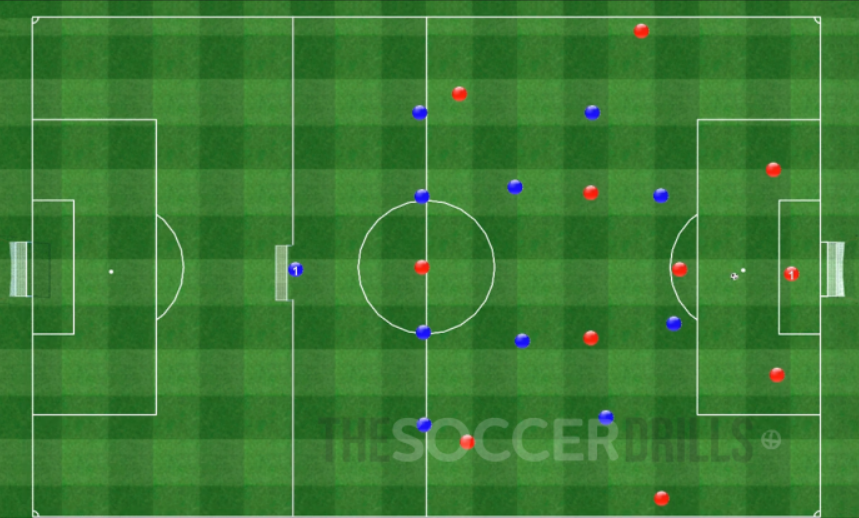
Possession build up game from the back Vs High Pressure
Combination play situation in which we add a condition to make the dril even more difficult so it can become easier in the games. Drill to achieve an effective building of the game through taking the right decisions.
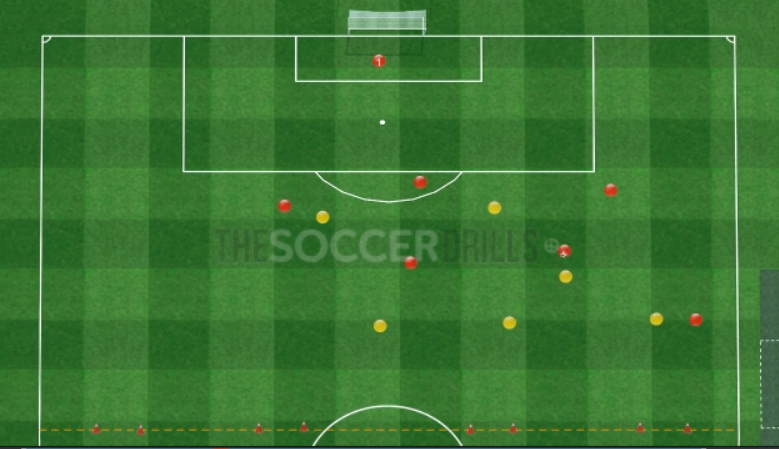
Overcoming High Pressure
To make a right high pressure or a good game building, and practice it in a game oriented similar situation is very possible.
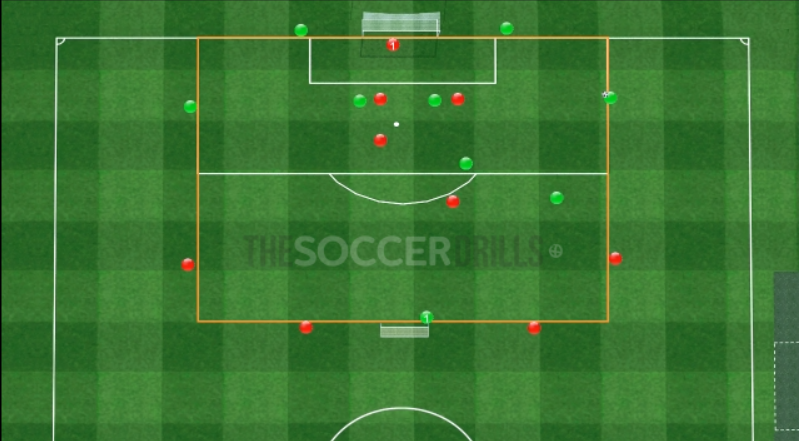
Double Box: Counterattack with players outside the active zone
To connect with players which are the farthest away possible from the ball is a synonymous of a good counter attack. To prevent your rivals of doing it is a synonymous of a good press after losing the ball and an accurate drop back. In this drill your players will improve both the defensive and the offensive transitions. The dimensions will be the double of the box.
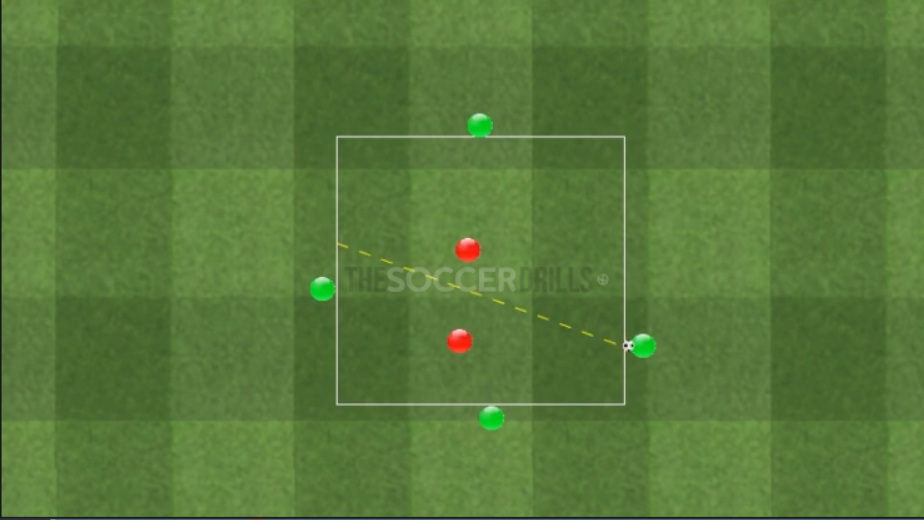
Rondo 4v2 “Pairs”
A tactical rondo in which you are not only going to work on offensive aspects but also on coverages, closing passing lines, interior passing defense, defensive delay and the right choice of the moment for activating the pressing.
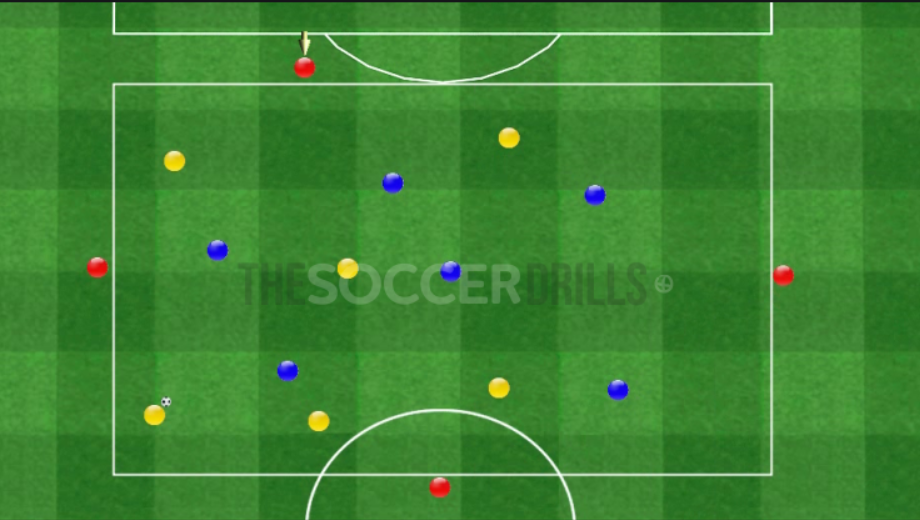
Supports: Superiority/inferiority
Ball retention, body orientation (One of Guardiola’s biggest obsession) to receive the ball from the exterior neutral player who has advantage through the guided discovery learning method. The defensive anticipations will make the attackers be on the right body shape to retain the ball and switch the play.